Your 20x40 Tent May Need a Fire Permit: The Code Triggers South Florida Hosts Don't See Coming
The Short Answer for South Florida Hosts
A single 20x40 tent covers 800 square feet. Under Florida law, that one detail changes the conversation. Section 633.202(17), Florida Statutes, exempts a tent of up to 900 square feet from the Florida Fire Prevention Code, including the national codes it incorporates.
So a lone 20x40 often falls under the state fire-code threshold. That is not the same as "no permit, no rules." Hosts get caught by everything around the tent: a building permit, a second tent, a bigger frame, a generator, a cooking station, a public property, or a venue with its own requirements. This guide walks through the triggers that actually show up on South Florida event sites.
Two Different Permits, Two Different Offices
Most confusion starts here. A tent can involve two separate reviews:
- Building permit. The Florida Building Code (Section 3103) requires a permit from the building official for temporary structures over 120 square feet that are used, or intended to be used, by 10 or more people. A 20x40 tent at a party clears 120 square feet easily.
- Fire review. Tents larger than 900 square feet fall under the Florida Fire Prevention Code, adopted by the State Fire Marshal. That code covers tents in NFPA 1 Chapter 25 and references NFPA 102 for tents and membrane structures.
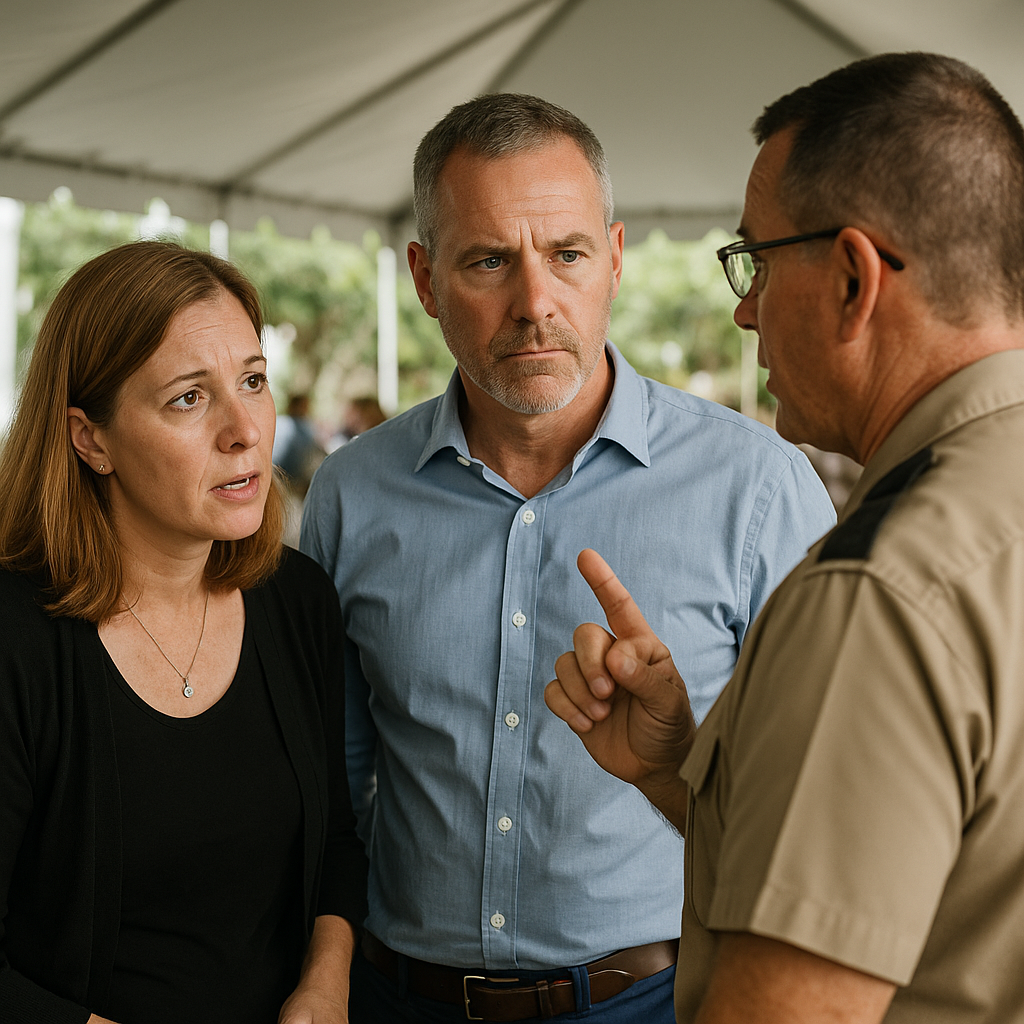
How these are enforced varies by jurisdiction. In some cities the building department collects the application and routes it to the fire marshal. In others, you apply to each office directly. Miami-Dade County publishes its own permitting procedures for temporary tents and membrane structures. In much of Broward, fire prevention is handled by the Broward Sheriff's Office Fire Marshal's Bureau or a municipal fire department, depending on the city.
Why Tent Size Matters More Than You Think
The 900-square-foot line is where many plans quietly cross from "exempt" to "fire code applies." Common ways it happens:
- Upsizing late. A guest count grows and the 20x40 becomes a 30x40 (1,200 sq ft) or 40x40 (1,600 sq ft).
- Adding a second tent. A separate catering, bar, or lounge tent next to the main one. Inspectors may look at how close tents are and whether joined or adjacent tents function as one structure. Ask your authority having jurisdiction (AHJ) how it treats multiple tents before you finalize the layout.
- Extensions and connectors. Marquee walkways or tent-to-tent connections can add covered area that hosts forget to count.
Once the fire code applies, expect requirements such as flame-resistant fabric certification, extinguishers, clear egress, separation from buildings and other tents, and possibly an inspection before guests arrive.
Sidewalls, Placement and Site Layout
Sidewalls make a tent more comfortable during a South Florida rain shower, but they change how the space works. An enclosed tent has defined exits, and inspectors care about how many there are, how wide they are, and whether tables, bars, or décor block them. If you plan to drop walls, show exit openings on your layout.
Placement is just as important. Local requirements commonly address:
- Distance from buildings, property lines, and other tents
- Clear fire department access and unobstructed hydrants
- Spacing between stake lines and covering stakes near walkways
- Clearing combustible material from under and around the tent
Exact distances vary by jurisdiction and venue, so don't rely on a number you saw for another city. Your permit office will tell you what it expects on the site plan.
Night Use, Cooking and Generators
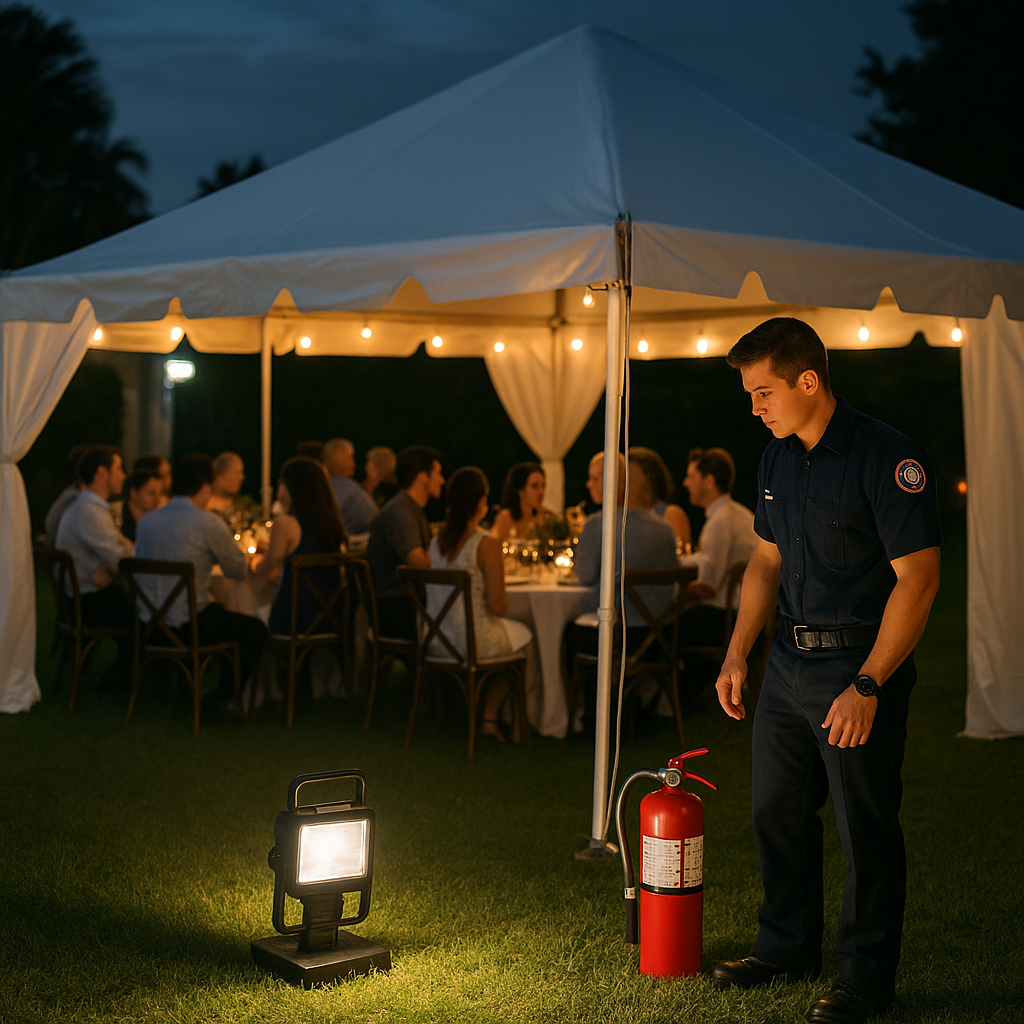
Evening events add complexity. Once the sun goes down, the question becomes whether guests can see their way out if power fails. For larger tents covered by the fire code, the Life Safety Code can require emergency lighting and illuminated exit marking. Even when a tent is exempt, good lighting at the exits is basic risk management.
The bigger triggers are usually equipment, not the tent itself:
- Cooking. Open-flame or fuel-fired cooking near or under a tent draws scrutiny almost everywhere. Plan catering stations outside the tent unless your AHJ approves otherwise.
- Generators and fuel. Broward County's local amendments to the Florida Fire Prevention Code include separation rules for engines, fuel, and other hazards near tents. Placement and barriers typically need to appear on your site plan.
- Heaters, candles and open flame. Many jurisdictions restrict or prohibit them inside tents without specific approval.
Flame-Retardant Certification and Extinguishers
Tent fabric is typically tested to NFPA 701, the standard for flame propagation of textiles and films. Reputable rental companies can provide a certificate or label for each tent. Ask for it when you book, not the week of the event. Fire officials can request it on site, and some permit applications require it up front.
Portable extinguishers follow NFPA 10, with the number, type, and location set by the AHJ based on tent size, use, and hazards like cooking or generators. Keep them visible and reachable, not tucked behind a bar.
Plan Your Lead Time Backwards
Permit timelines depend on the jurisdiction, the property, and how complete your application is. A practical way to plan:
- Lock the tent plan first. Size, number of tents, sidewalls, and whether you're cooking or running generators.
- Call the property's jurisdiction early. Confirm whether you need a building permit, a fire review, or both, and how far ahead they want the application.
- Gather documents. Site plan with distances, tent specs, NFPA 701 certificate, layout with exits, and any venue or landlord authorization.
- Leave room for revisions and inspection. Four weeks is a reasonable minimum for a straightforward private event. Public property can take far longer. Miami-Dade Parks special event permits, for example, are due 60 to 120 days ahead depending on event class, and the county notes that tents larger than 10x10 require building-department permits on park property.
Venues, HOAs, and country clubs often have their own tent rules, insurance requirements, and approved vendor lists. Those can be stricter than the code.
Frequently Asked Questions
What do I need to apply for a tent permit?
Requirements vary by office, but most applications ask for a site plan showing the tent location and distances to structures, tent size and quantity, intended use, setup and takedown dates, and the flame-resistance certificate from the rental company. Larger or more complex events may also need a floor plan showing seating, exits, and extinguisher locations.
How long does it take to get a tent permit?
It depends on the jurisdiction and the property. Start at least four weeks out for a private event, and confirm the specific deadline with the permitting office. Events on public land or in parks often need applications months in advance.
Do I need a permit for a tent used in my backyard?
Possibly. A single tent of 900 square feet or less is exempt from the state fire code by statute, but your city or county building department may still require a permit for a temporary structure, and HOA rules may apply. Call your local building department with the tent size and guest count before you book.
Does a 20x40 tent need a fire permit?
A single 20x40 tent is 800 square feet, under the 900-square-foot fire-code exemption in Florida law. It can still need a building permit, and adding tents, cooking, generators, or larger frames can bring fire review into play. Confirm with the local AHJ.
The Bottom Line
A 20x40 tent isn't automatically a fire-code problem, but the plan around it can turn into one fast. Count your total covered area, decide on sidewalls, place cooking and generators thoughtfully, get the NFPA 701 certificate early, and call the jurisdiction before you sign off on the layout. When VNV Events produces a tented event, we build these details into planning from the start, so the permit conversation happens weeks before the tent goes up, not the day of.
Visuals