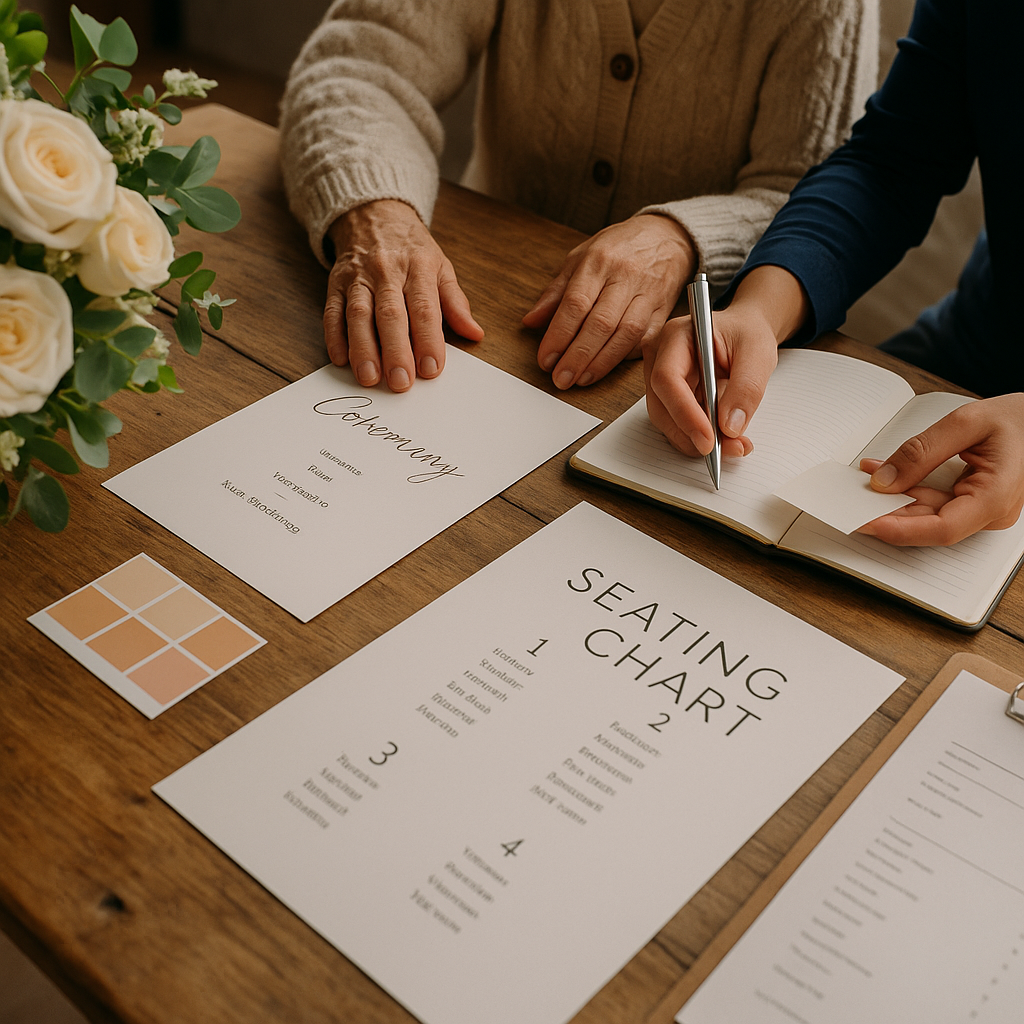
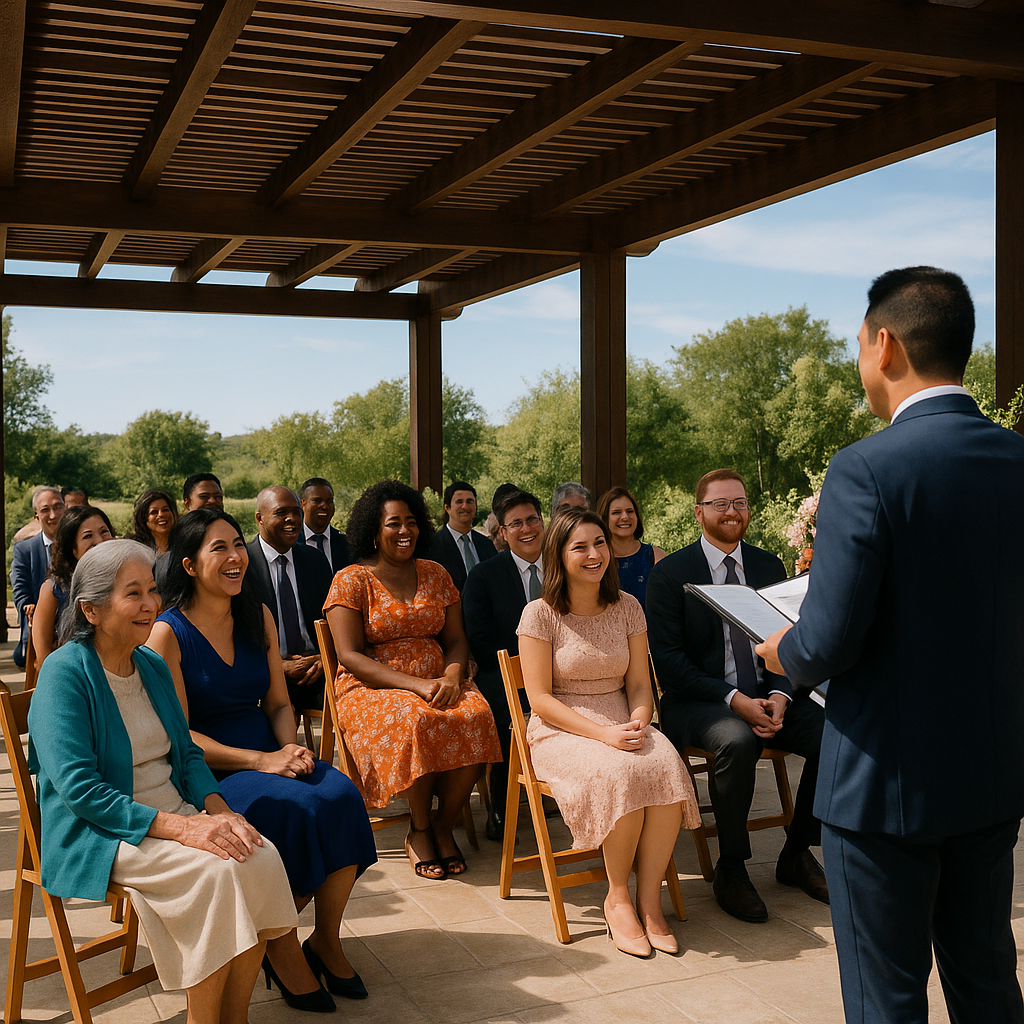
Picture this: the officiant delivers the vows in English, the bride tears up, and in the third row her grandmother smiles, claps when everyone else claps, and glances around looking for a clue. Across the aisle, the groom's parents listen to a reading in Spanish with the same polite smile. No one complains. But two of the people who love the couple most have just witnessed the most important moment of the day without knowing what was said.
Smiling through a ceremony isn't the same as feeling part of it. And the difference rarely comes down to goodwill. It comes down to design.
In South Florida, multiple languages aren't the exception
According to the U.S. Census Bureau QuickFacts, 75.3% of people age 5 and older in Miami-Dade speak a language other than English at home (2020-2024 estimate). That figure doesn't tell you who is fluent in English, and it doesn't describe your wedding guests. What it does is remind us that multilingual families are a normal part of the region, and that a ceremony designed in a single language can leave someone out without anyone noticing.
Ask first. Don't guess
One risk is assuming. Assuming Grandma needs Spanish because she's 80, that your in-laws understand English because they were born here, or that a family prefers one language because of their last name or country of origin. The language someone speaks at home doesn't tell you which one they'd prefer for following an emotional ceremony, either.
Ask directly and casually: “Which language would you like to hear the vows and readings in?” Some people understand one language well but are moved in another. Others would rather read than listen. With those answers, you have a real map, not a stereotype.
Decide what no one can miss
Not everything needs to exist in two languages. What does need clarity are the essential messages: who is speaking, what each ritual means, when to stand, when to applaud and, above all, the words the couple wants everyone to receive.
With that list in hand, the design gets simpler. Some moments work well in the original language with a written version in the program. Others call for a brief summary that is announced, faithful, and reviewed and approved by the couple. And some words—your vows, for example—you may want to keep in full. For those, a summary isn't enough: choose a faithful format and prepare it with the right professional. Repeating everything in both languages isn't required; it's just one option among several.
MC, officiant, translator and interpreter: four different roles
These roles often get mixed up, so it helps to separate them:
- Officiant: leads the ceremony. Anything with legal or religious implications is decided with this person, not with the rest of the team.
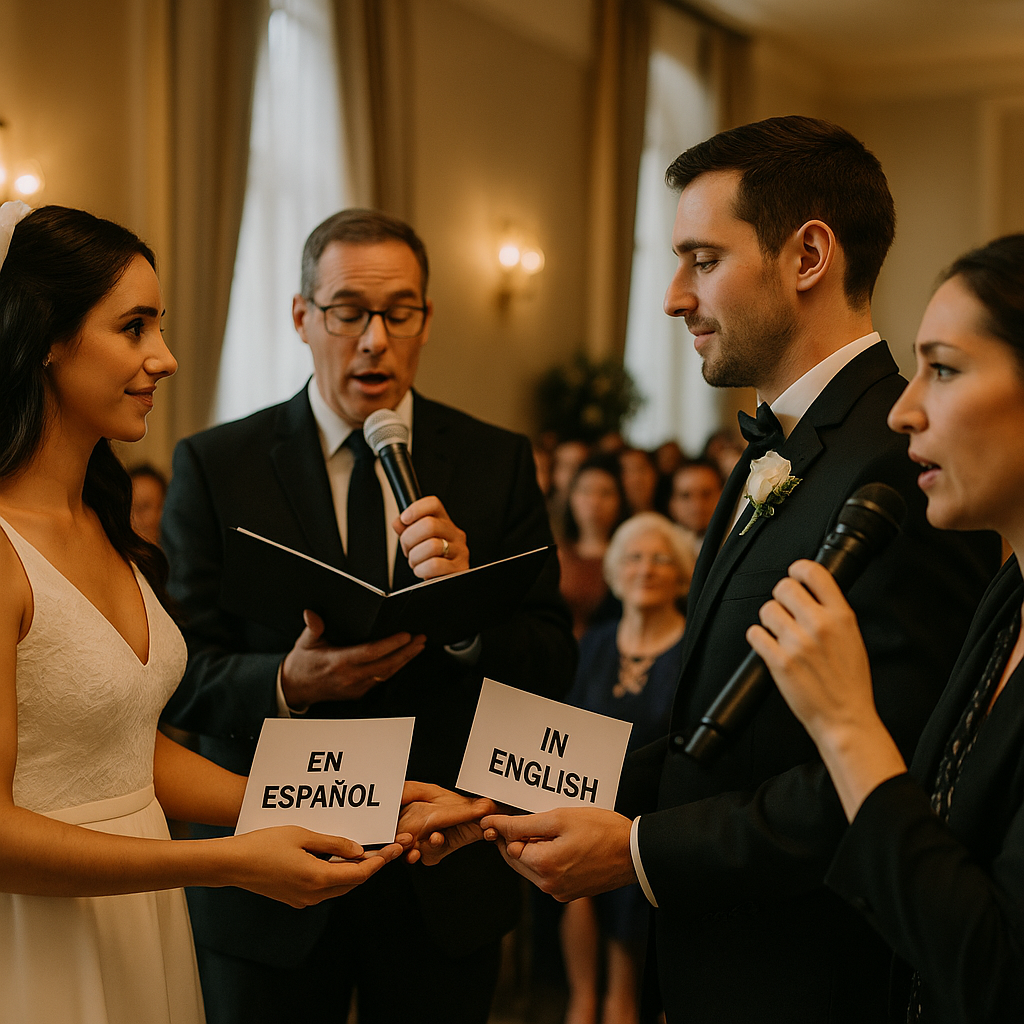
- MC: guides the experience, announces moments and hands off the microphone. A bilingual MC helps a lot, but isn't automatically an interpreter or an officiant. Confirm ahead of time which languages they speak and exactly what they'll do.
- Translator: works with written text, such as programs, printed readings or vows on paper.
- Interpreter: works with the spoken word, live.
The American Translators Association explains that difference and describes two main modes of interpreting: in consecutive interpreting, the speaker pauses so the interpreter can convey each segment; in simultaneous interpreting, the interpreter speaks almost at the same time, sometimes with microphones and headsets. Consecutive interpreting stretches out each moment; simultaneous may require specific equipment and different preparation. Knowing this helps you choose based on the pace you want.
For the vows, it's wise to treat a machine translation as a draft and review it with a professional before the ceremony. The final choice of words belongs to the couple.
Let Grandma participate, not work
Without a plan, a bilingual cousin can end up whispering the ceremony into an aunt's ear, or a sister improvising translations while trying to cry in peace. That person stops living the moment and starts working it. If you want a family member involved, give them a role of their own: a rehearsed reading in their language, a blessing, a processional. Participating is different from carrying the interpretation.
A sample moment-by-moment script
A simple table helps the whole team know what happens, in which language and who owns it. This is just an example; every ceremony is built around its own format.
| Moment | Language and format | Who | Technical cue |
|---|---|---|---|
| Welcome | Both languages, short sentences | MC or officiant | Mic live, music low |
| Processional | No speaking; program explains the order | Coordination | Song change for each entrance |
| Reading | Original language + written version in the program | Rehearsed reader | Mic stand adjusted |
| Vows | Faithful format agreed on in advance | Couple and chosen professional | A mic for each voice |
| Family ritual | Brief summary, announced and approved | Officiant | Musical pause |
| Recessional | Announcement in both languages | MC | Recessional music |
In production, this kind of document is called a show flow, and cue management is exactly what keeps a language switch from feeling like a gap. At VNV, we approach event planning and coordination with that same logic: every moment has an owner, a start and an end. A small wedding doesn't need full-scale production to benefit from a clear script.
Readings, vows and toasts everyone can follow
Anyone who will speak needs preparation designed for a mixed audience. For audiences with different languages and cultures, Toastmasters recommends enunciating clearly, not speaking too fast, and avoiding jargon, idioms or metaphors that don't carry well across cultures. Applied to a wedding: short sentences, inside jokes explained or cut, and real pauses between one idea and the next.
Pauses aren't wasted time, either. When a moment is delivered in two languages, the pace changes. Plan for it based on the format you choose, rehearse it with a clock and adjust. There's no universal length that works for every ceremony.
The rehearsal: listen from the back row
A good bilingual design can fall apart over a technical detail. That's why the rehearsal includes:
- A sound check from the back rows. If Grandma is sitting in the back, that's where it needs to sound clear.
- Name pronunciation. Make sure the MC and officiant say every name correctly, in both languages.
- Coordinating entrances, music and microphones. Who speaks, on which mic, and what plays before and after.
- Handing off the microphone. So no one is left waiting for a cue that never comes.
This is the part VNV Live brings together: DJ/MC, sound equipment, microphones for speeches and music coordination from the ceremony to the dance floor. The MC's languages and scope are confirmed when we prepare the proposal, along with their responsibilities during the event.
Let's review your ceremony, moment by moment
If your South Florida wedding brings together families who are moved in different languages, schedule an individual consultation with VNV Events. Together, we'll review which language each family prefers, which moments are essential, how the space works, what the sound needs and how to coordinate everyone who takes the microphone. The goal is simple: that no one in the third row has to guess.