
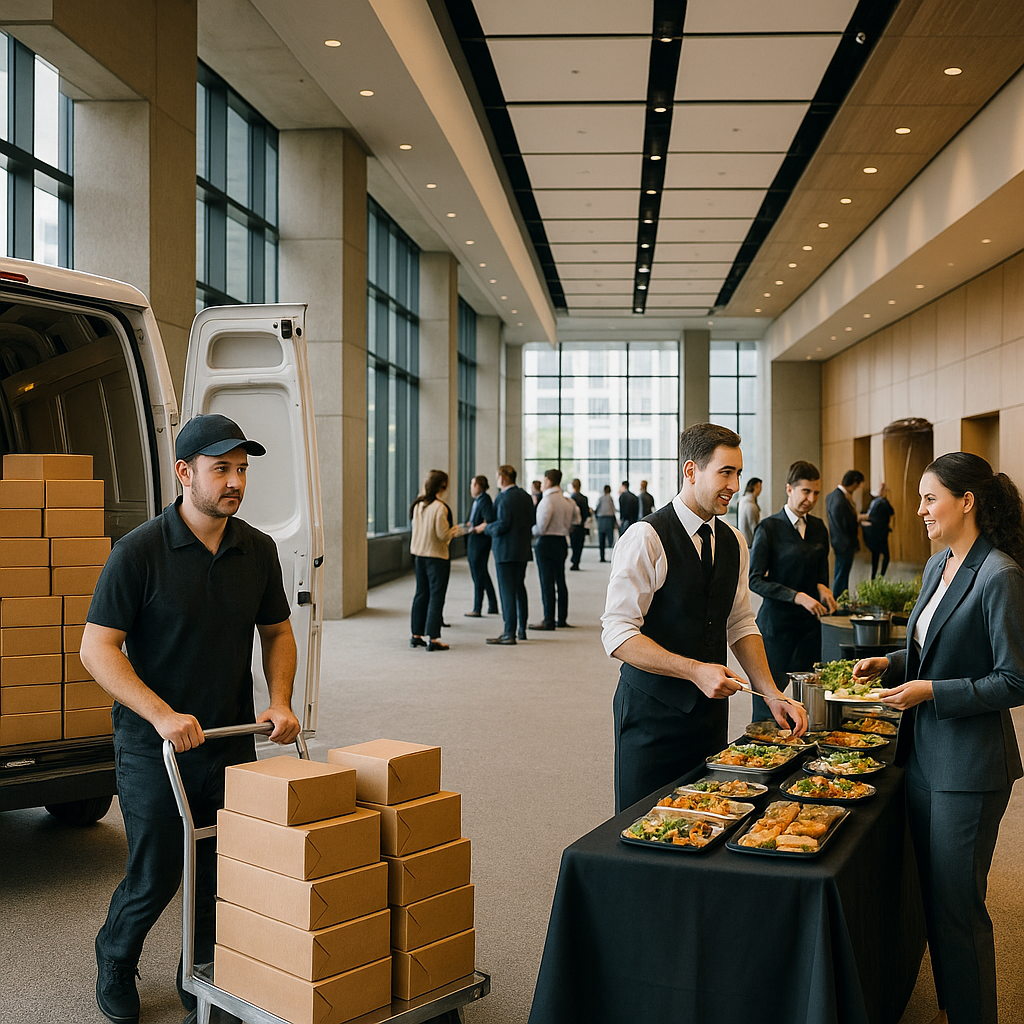
Drop-Off vs. Staffed Catering for Office Events: What Changes Once the Food Leaves the Truck
The menu can be identical either way. What really differs between drop-off and staffed catering is who is responsible for the food after it arrives: who keeps it hot or cold, who refills the trays, who answers allergy questions, and who cleans up when the meeting runs long. For an office event, that handoff decides whether lunch runs itself or someone on your team spends the afternoon managing a buffet.
The Short Version
Drop-off catering: The caterer prepares and delivers the food, sometimes sets it out, and leaves. From that moment, your team owns timing, temperature, presentation, replenishment, and cleanup.
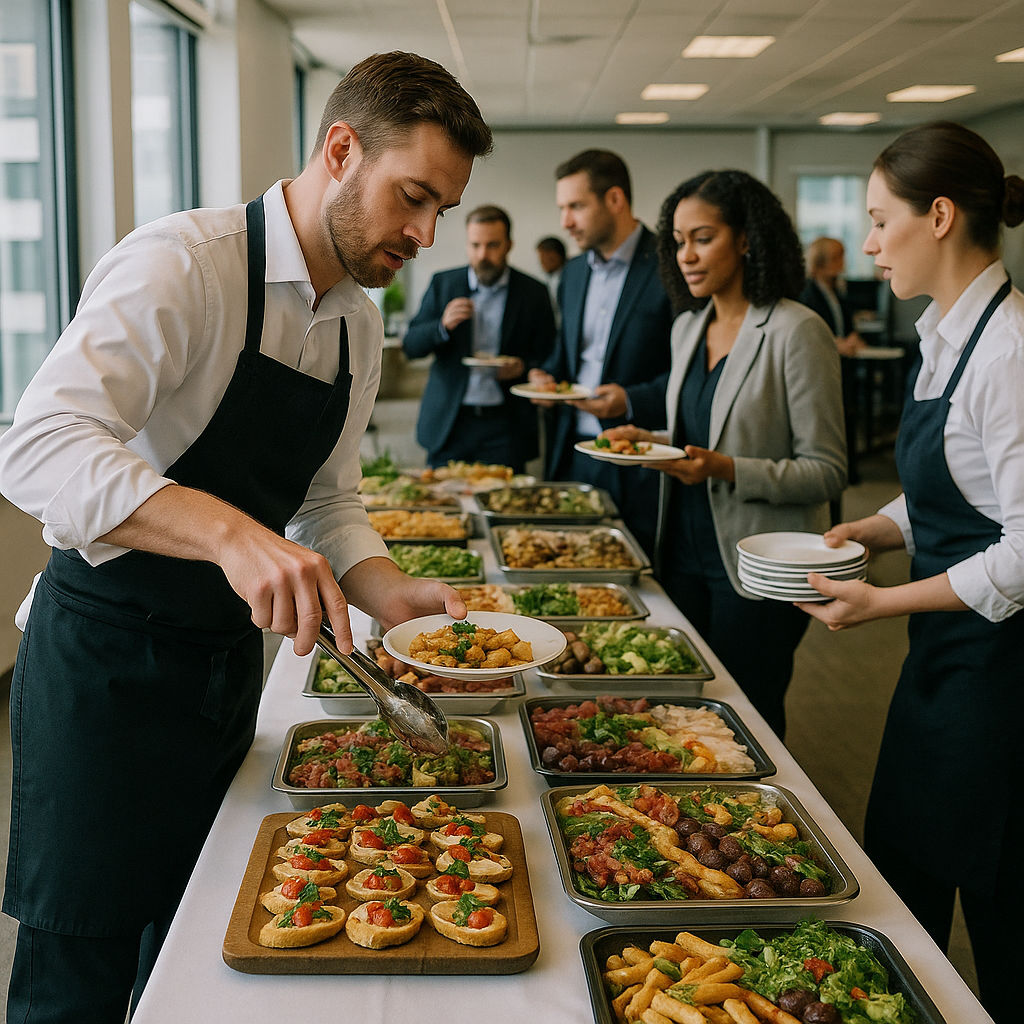
Staffed catering: The caterer's team stays for the service window. They set up, run the buffet or stations, watch food temperatures, keep things stocked, handle guest questions, and break down afterward.
Neither one is better in general. The right choice depends on how long the food will be out, who your guests are, and how much your own staff should be hosting versus taking part.
What Changes Once the Food Leaves the Truck
| Responsibility | Drop-Off | Staffed |
|---|---|---|
| Setup and presentation | Basic setup, if included; your team handles the rest | Caterer sets up buffet, stations, or plated service |
| Temperature and timing | Your team tracks how long food has been out | Caterer monitors holding equipment and swaps trays |
| Replenishment | Whatever arrives is what you have on the table | Staff refill and rotate food through the service window |
| Allergen and dietary questions | Labels and individually packed meals do the work | Briefed staff can answer questions on the spot |
| Cleanup and leftovers | Your team clears, stores, or discards | Caterer breaks down; leftovers handled per your agreement |
| Guest experience | Self-serve and casual | Hosted and polished, with staff visible in the room |
Food Safety: The Clock Starts at Delivery
This is the part most office planners underestimate. The USDA's Food Safety and Inspection Service advises keeping hot food at 140°F or above and cold food at 40°F or below, and not leaving perishable food out for more than two hours, or one hour when the air temperature is above 90°F. Its guidance on take-out and delivered foods applies the same two-hour rule to catered meals that arrive at your door.
In South Florida, the one-hour limit is not hypothetical. Patio lunches, courtyard receptions, and food staged near a loading dock can easily sit in 90°F-plus heat. Indoors, an air-conditioned conference room still runs on the two-hour clock.
With drop-off, keep it simple:
- Schedule delivery as close to serving time as the caterer allows.
- Ask exactly what holding equipment is included: insulated carriers, chafing dishes, ice beds, or nothing.
- Name one person to note when the food went out and when it should come off the table.
- Follow the USDA's rule for anything uncertain: when in doubt, throw it out.
With staffed catering, the caterer's team manages these steps during the service window. That is often the single biggest reason companies choose staff for lunches that run longer than a quick meeting.
Allergens and Dietary Needs
The FDA recognizes nine major food allergens: milk, eggs, fish, crustacean shellfish, tree nuts, peanuts, wheat, soybeans, and sesame. Sesame was added most recently and is easy to miss in dressings, sauces, and breads.
- Drop-off: Ask for clear tray labels and individually packed, labeled meals for guests with serious allergies. Keep serving utensils with their own dishes so they don't migrate between trays.
- Staffed: Servers can answer questions in real time, but only if they've been briefed. Share your dietary list with the caterer in advance and confirm it before the event.
Your Building's Rules Matter
Office events happen inside someone else's rules. Before choosing a service style, check with property management on:
- Loading dock hours and freight elevator reservations
- Whether vendors must submit a certificate of insurance before arrival
- Whether open-flame chafing fuel is allowed, or electric warmers are required
- Where staff can stage, plug in equipment, and dispose of waste
These policies vary by building, and the fire safety rules for your space are set by the building and the local authority having jurisdiction. A staffed caterer usually coordinates these details directly; with drop-off, confirm them yourself so the delivery isn't stuck at the dock.
If Alcohol Is Involved
Serving alcohol at an office event changes the conversation. In Florida, a licensed food caterer can apply for a caterer's beverage license that allows it to serve alcohol at events where it is also providing prepared food. Ask whether your caterer holds one, and confirm your company's policy and your building's rules before planning a bar. Staffed service is generally the more practical fit when alcohol is poured, because someone is responsible for serving it.
Verify the Caterer's License
Most catering operations in Florida are licensed by the Department of Business and Professional Regulation's Division of Hotels and Restaurants. Its catering guide explains the requirements, and you can ask any caterer for its license number and confirm its status with the division. This applies to drop-off and staffed caterers alike.
When Each Option Fits
Drop-off tends to work well for:
- Working lunches and internal meetings with a short eating window
- Boxed or individually packed meals
- Menus that hold well, such as sandwiches, salads, and grain bowls
- Teams that have someone available to manage setup and cleanup
Staffed catering tends to work well for:
- Client-facing events, executive visits, and company celebrations
- Hot buffets or stations that need to be held and replenished over time
- Larger headcounts, where line flow and refills affect the whole event
- Events with alcohol
- Any event where your own team should be participating, not hosting
The middle ground: Some caterers offer a hybrid, such as delivery with an attendant for setup and the first stretch of service, or a crew that returns for breakdown. If neither option fits cleanly, ask whether one is available.
Questions to Ask Before You Book
- What exactly is included at delivery: setup, serveware, holding equipment, labels?
- How long is the food designed to sit out, and how will it be kept at temperature?
- For staffed service: how many staff, for how many hours, and what happens if the event runs over?
- How are allergens labeled and separated?
- Who handles trash, leftovers, and rented equipment pickup?
- Can you share your DBPR license number and certificate of insurance?
FAQs
What is the average cost difference between drop-off and staffed catering?
There's no reliable average, because the gap depends on labor hours, staff count, equipment, rentals, and event length. The clearest comparison is to ask for an itemized quote that separates food from service, so you can see what staffing actually adds and what it replaces in your own team's time.
Can I switch from drop-off to staffed catering for my event?
Usually, yes, depending on staff availability. The earlier you ask, the easier it is. Check whether your building needs updated vendor details, such as staff names or insurance documents, once a service team is added.
What should we do with leftovers?
Follow the USDA's guidance: refrigerate perishable leftovers within two hours, or one hour above 90°F, and discard anything that has sat out longer. With staffed service, agree in advance on how leftovers will be handled.
What Staffed Service Looks Like on Site
VNV Events plans and caters office events across Broward, Miami-Dade, and Palm Beach counties, from simple drop-off lunches to fully staffed receptions. If you're unsure which format fits your event, share your headcount, timing, and venue with us and we'll recommend a service level that matches it.