Face-Scan Check-In Looks Impressive. It Also Collects Data You May Not Be Allowed to Keep.
Event Trends · Registration & Arrival Technology
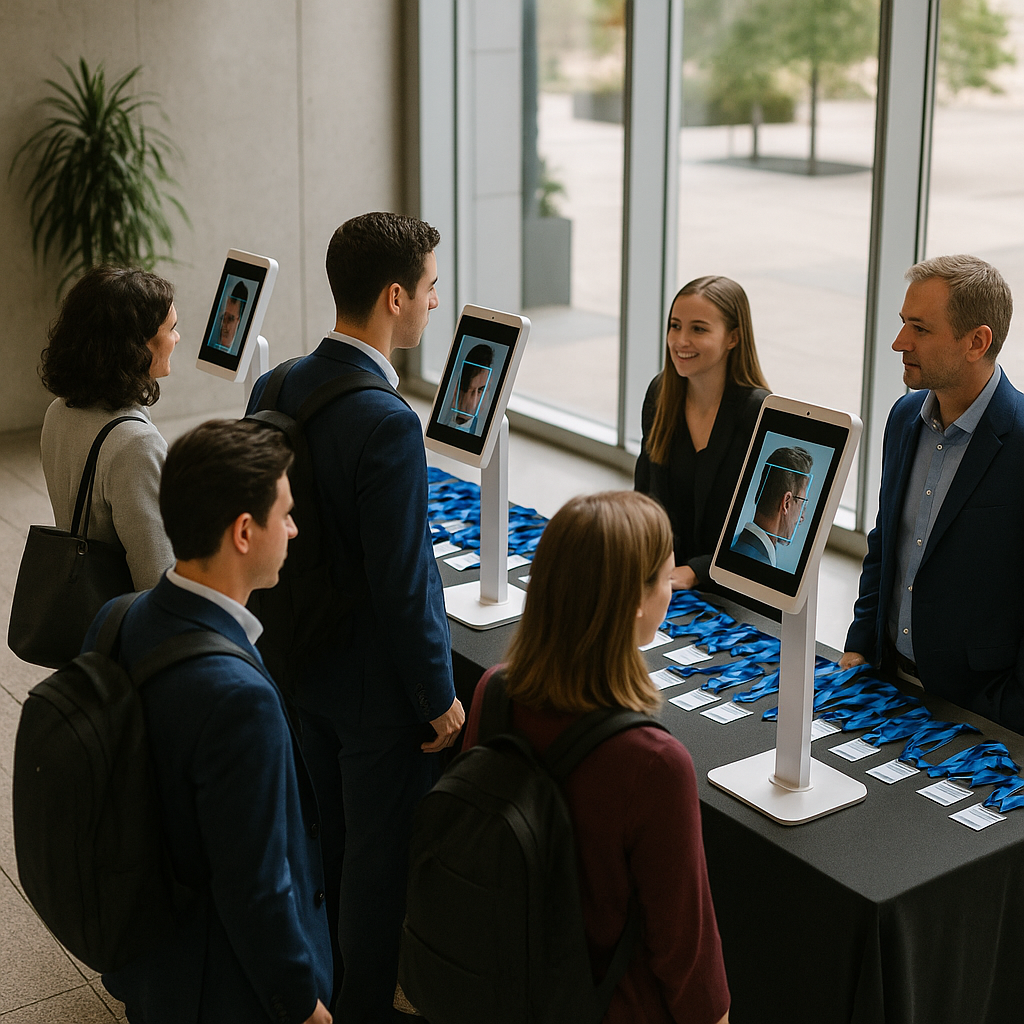
A sponsor offers to cover a facial-recognition check-in kiosk for your 700-person summit. It scans in under two seconds, the badge prints itself, and the photo op writes itself. Before you say yes, answer three questions: where does the face template live, who is contractually obligated to delete it, and on what date? If nobody in the room can answer, you are not buying faster arrivals. You are buying a data retention obligation with 700 names attached to it.
The kiosk isn't storing a photo. It's storing something you can't reissue.
This is the distinction that trips up otherwise careful organizers. A face-scan system converts an image into a mathematical template — a scan of face geometry — and that template is what gets stored, indexed and matched. Illinois law names a scan of face geometry as a biometric identifier and excludes ordinary photographs, which is exactly why "we already take event photos" is not a defense. The legislature's own stated reasoning is blunt: a compromised Social Security number can be reissued, and a face cannot.
So the risk profile of your registration desk changes the moment the camera starts matching rather than merely photographing. A leaked attendee list is embarrassing. A leaked template set attached to names, employers and badge tiers is permanent.
The jurisdiction in the ballroom is not the only jurisdiction in the room
Corporate summits pull attendees from everywhere, and your tech vendor's servers are somewhere else again. Here is the landscape a producer should walk into a vendor call already knowing:
| Where it bites | What the rule actually requires | Who enforces it |
|---|---|---|
| Illinois (BIPA) | Public written retention-and-destruction policy; informed written release before capture; destruction when the purpose is satisfied or within 3 years of last interaction, whichever comes first (740 ILCS 14/15) | Private lawsuits — $1,000 negligent, $5,000 intentional or reckless, plus fees. A 2024 amendment (P.A. 103-0769) capped repeat scans of the same person by the same method at a single recovery and confirmed electronic signatures count as a written release |
| Texas (CUBI) | Inform and obtain consent before capture; reasonable care in storage; destroy within a reasonable time and no later than one year after the purpose expires (Tex. Bus. & Com. Code § 503.001) | Attorney General only, with civil penalties up to $25,000 per violation |
| Colorado | Consent before collection, a written retention/destruction/breach-response policy, limits on selling or trading identifiers, and consumer access rights (HB24-1130, effective July 1, 2025) | Attorney General and district attorneys; no private right of action |
| New York City | Conspicuous plain-language signage at every customer entrance, and an outright ban on selling, trading or otherwise profiting from biometric identifier information — "places of entertainment" like theaters, arenas and exhibition venues are squarely covered (NYC Admin. Code § 22-1202) | Private suits, with a 30-day cure window on the signage provision and none on the sale ban |
| Florida | No dedicated biometric consent statute, but since July 1, 2024 biometric data sits inside the definition of "personal information" under Fla. Stat. § 501.171 — so a breach triggers notice to affected individuals within 30 days, notice to the Department of Legal Affairs at 500+ residents, and penalties up to $500,000 for notification failures | Department of Legal Affairs; no private cause of action under that section |
| EU attendees or EU-based platforms | Biometric data used to uniquely identify a person is a special category requiring an Article 6 basis and an Article 9 condition (GDPR Art. 9). Separately, the EU AI Act's prohibited practices — live since 2 February 2025 — bar emotion inference in workplace settings and biometric categorization that deduces protected traits | Data protection authorities and national market surveillance authorities |
Read that Florida row again, because it is the one most South Florida organizers underestimate. Nobody in Broward needs your explicit written release to scan a face at a corporate arrival. But if that template set is breached, biometric data is now the trigger for a 30-day clock — and if your check-in vendor is a third-party agent holding the data on your behalf, § 501.171 gives them just 10 days to tell you a breach happened. A contract that doesn't mirror that timeline leaves you doing incident response with borrowed time.
The failure that actually happens at the door isn't a lawsuit. It's a line.
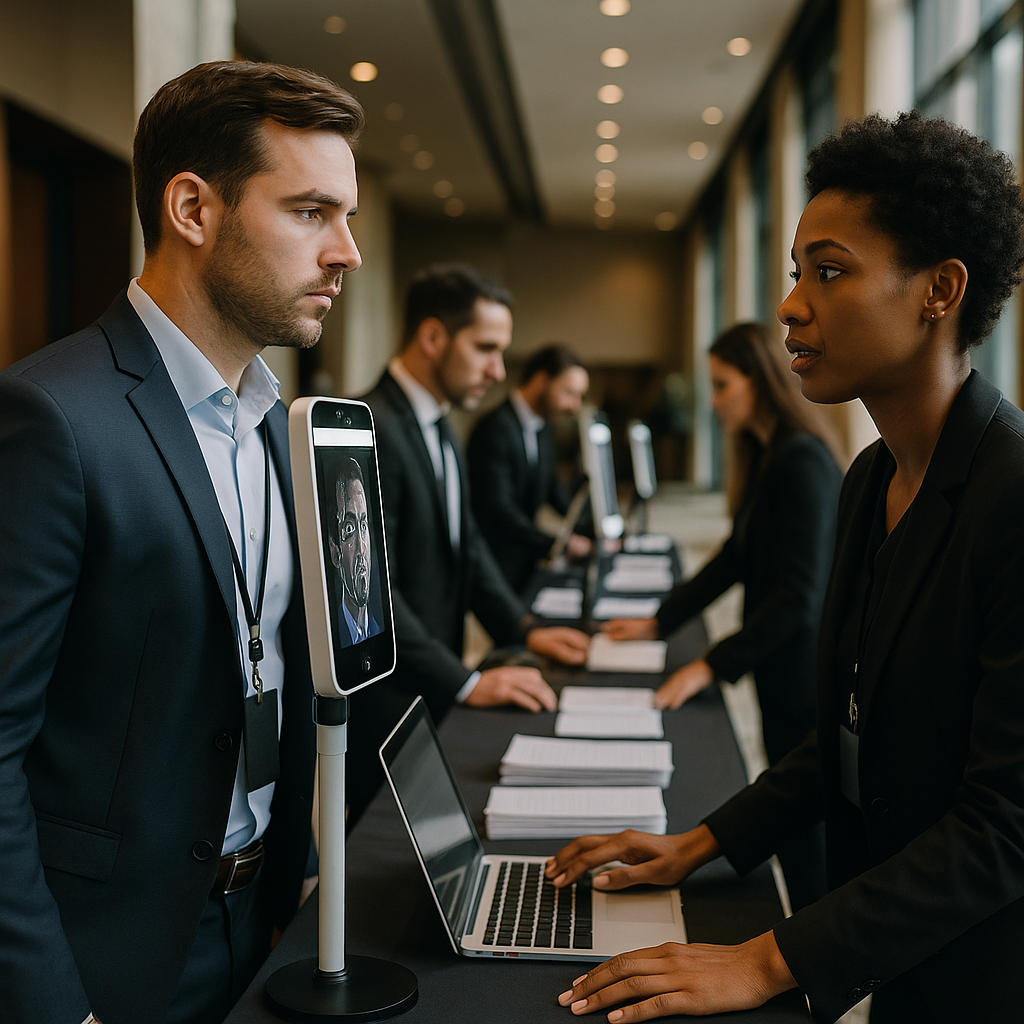
Legal exposure is the slow risk. The fast one is a guest standing in front of a kiosk that will not recognize them while 200 people queue behind. NIST has been measuring this for years: its landmark study of demographic effects, NISTIR 8280, found error rates that varied by demographic group across the algorithms tested, with the highest one-to-many false positive rates falling on African American women — the kind of error whose consequence is a false accusation, not an inconvenience. NIST's follow-up work adds a useful operational nuance: false negatives are driven substantially by poor image capture, including underexposure of darker-skinned faces, which is fixable with better cameras and lighting — while the larger false-positive differentials persist even in pristine images and have to be addressed in the algorithm itself.
Translate that into production decisions and it stops being an ethics abstraction. Your kiosk lighting is a check-in reliability control. Your fallback lane is not optional. And no attendee should ever be denied entry on the strength of a machine's score alone — a human with a laptop and the registration list is the appeal process.
Eight questions that decide the vendor call
- Are you a processor acting on our instructions, or a controller doing your own thing with this data? Get it in writing.
- Is the stored artifact the template, the source image, or both — and where does each one physically live?
- Does any clause let you retain templates to "improve" or train a model after our event? If yes, that is a different product than check-in.
- What is the deletion date, expressed as a date and not a policy? Texas caps it at one year past purpose; Illinois at purpose-satisfied or three years from last interaction.
- Will you provide a signed deletion certificate, and can we audit it?
- Who are your subprocessors and where do they sit?
- What is your breach notification window to us in hours — and does it beat the 10 days Florida gives a third-party agent?
- Will you contractually confirm you never sell, lease, trade or otherwise profit from the data? In New York City, that one is not negotiable by statute.
If you're keeping the face scan, run it like an operations system
The technology is not the problem. Undocumented data is. For corporate programs where sponsors, security or throughput genuinely justify biometric arrival, the discipline looks like this:
- Consent belongs in registration, not at the kiosk. Capture it as a separate, unbundled action before the badge is issued — never buried in a ticketing terms-of-service checkbox at the point of a 40-person queue.
- Signage at every entrance, in plain language. Even where it isn't legally required, it is the cheapest trust signal you will ever print.
- Build the opt-out lane first. A staffed manual check-in path that is equally fast and visibly equal in status. If the non-biometric line is the slow, embarrassing line, your consent was never freely given in practice.
- Assign the deletion. One named person owns the post-event destruction task, with a calendar date and written confirmation from the vendor. Deletion that lives only in a policy PDF does not happen.
- Brief the front-of-house team on the failure script — what they say and do when the match fails, so nobody improvises their way into a scene.
The quieter question: does the scan solve a problem you actually have?
Most check-in bottlenecks are not recognition-speed problems. They are door-count problems, badge-printing problems, or a single check-in table serving three arrival streams that should have been split. QR-coded pre-printed badges, RFID, and a properly staffed arrival plan clear a 700-person room without creating a permanent identifier you have to guard, defend and destroy on schedule. Choose biometrics when it buys you something the staffing plan can't — controlled-access zones, credential fraud risk, a genuinely high-security program — and skip it when the honest answer is that it looks impressive on a sponsor recap.
Frequently asked questions
Does Florida require attendee consent before a face scan at a private corporate event?
Florida has no dedicated biometric consent statute comparable to Illinois or Texas. What Florida does have is § 501.171, which now counts biometric data as personal information for breach purposes — meaning the absence of a consent rule does not translate into an absence of exposure. Out-of-state attendees and out-of-state vendors can also bring other states' rules into the conversation, which is a question for your counsel, not your AV company.
Our attendees agreed to the ticketing terms. Isn't that consent?
Treat bundled terms-of-service acceptance as the weakest form of the thing you need. Illinois requires an informed written release specific to biometric collection — electronic signatures now expressly qualify — and the EU standard for special-category data is explicit consent on top of a separate lawful basis. A single checkbox covering photography, marketing and biometrics at once is the pattern most likely to be picked apart later.
What retention period should we contract for?
The defensible answer is the shortest one that still does the job: delete templates when the event's purpose is complete, typically within days of load-out. Statutory outer limits are ceilings, not targets — one year past purpose in Texas, purpose-satisfied or three years from last interaction in Illinois. If a vendor pushes back on same-week deletion, ask what business of theirs the extra time serves.
Can we reuse this year's face data for next year's event to speed up returning attendees?
That is a new purpose, and new purposes generally need new notice and new consent. It also converts a one-weekend dataset into a standing database — the exact thing that turns a manageable risk into an ongoing one.
Can we let a sponsor analyze the footage for dwell time, demographics or reactions?
This is where "check-in convenience" quietly becomes surveillance analytics. Inferring emotions or deducing protected characteristics from biometric data sits among the practices the EU has prohibited outright since February 2025, New York City bans profiting from biometric identifier information, and several state regimes restrict selling or trading it. Sponsor value should come from the badge scan data you're already permitted to collect.
What's the single most useful clause to add to a check-in vendor contract?
A dated deletion obligation paired with a written certificate of destruction delivered to you. It is the one term that converts every promise above into evidence.
This article is general information about event operations, not legal advice. Biometric privacy rules differ by state, city and country and change frequently. Have your own counsel review any biometric check-in deployment, vendor agreement and consent language before your event.
The decision, stated plainly
Speed at the door is easy to buy and easy to demo. Custody of a permanent identifier is neither. Before the kiosk ships, write down the deletion date, the name of the person who owns it, and the clause that lets you prove it happened. If any of the three is blank, run the arrival on badges and people instead — nobody has ever been sued over a QR code, and no attendee has ever left a summit talking about how memorable the check-in scanner was.
Visuals