Floral Foam Is Plastic: What Foam-Free Centerpieces Can and Can't Do
The Short Version
The green bricks under many wedding and gala centerpieces are plastic. For decades, wet floral foam has been the default way to hold stems in place and keep them supplied with water. It works well, but it is a single-use material that crumbles into fragments and cannot be composted with the flowers.
Foam-free designs can replace it for most tabletop centerpieces. They are not a perfect substitute for every design, though. This guide explains what floral foam is, what the research does and does not show, and where foam-free mechanics work well or need extra planning for South Florida events.
What Floral Foam Actually Is
Traditional wet floral foam is a phenol-formaldehyde plastic. That is the same family of phenolic resins used in some insulation foams and in Bakelite. The Sustainable Floristry Network explains it this way: the open, honeycomb-like cells let water move through the block and into the cut stems. The same structure is why it breaks so easily into tiny pieces.
Smithers-Oasis introduced water-absorbing floral foam in 1954, according to the manufacturer. It became popular because it is cheap, fast to work with, easy to cut to shape, and convenient for moving finished arrangements between a studio and a venue.
What the Research Shows, and What It Doesn't
The most-cited study came from RMIT University in Australia and was published in Science of the Total Environment in 2019 (Trestrail et al., “Foaming at the mouth”). The researchers found three things:
- Animals ate it. Every freshwater and marine invertebrate species tested ingested floral foam microplastics.
- Some showed stress. Some species had biological stress responses after eating the particles. The particles did not kill the animals in the test conditions.
- Chemicals leached into water. Compounds from the foam particles leached into the surrounding water. The “biodegradable” version tested leached more phenolic compounds than regular foam.
The authors called for more research. So the accurate takeaway is narrow: floral foam fragments are a microplastic source with documented effects on aquatic animals. The study does not show that handling foam at an event is dangerous to guests.
The way foam is usually disposed of makes the problem worse. Foam stuck to stems contaminates green waste, so the flowers can't be composted. Soaking water full of crumbs often goes down sinks or storm drains.
Some major organizations have acted on this. The UK’s Royal Horticultural Society, which runs the Chelsea Flower Show, has banned floral foam at its shows.
“Biodegradable” and Plant-Based Foam: Read the Fine Print
Manufacturers now sell foams with better environmental claims. Before treating any of them as a full fix, check what the claim actually covers:
- “Enhanced biodegradability” foams. Smithers-Oasis says its Maxlife foam fully biodegraded in 567 days under a landfill test standard (ASTM D5511). The company notes that suitable facilities may not exist in your area. These products are designed for landfill disposal. They are not compostable, and they should not go in green waste.
- Plant-based foams. For its plant-based OASIS® Renewal® foam, Smithers-Oasis says compostability certification is still in progress. Until then, it recommends putting the foam in the regular trash.
- Marketing language. In the U.S., the FTC’s Green Guides set a high bar for unqualified “biodegradable” and “compostable” claims. If a product says “eco,” ask how it should be disposed of and what test the claim is based on.
What Foam-Free Centerpieces Can Do
Florists arranged flowers without foam for generations, and those techniques still hold up. Common foam-free mechanics include:
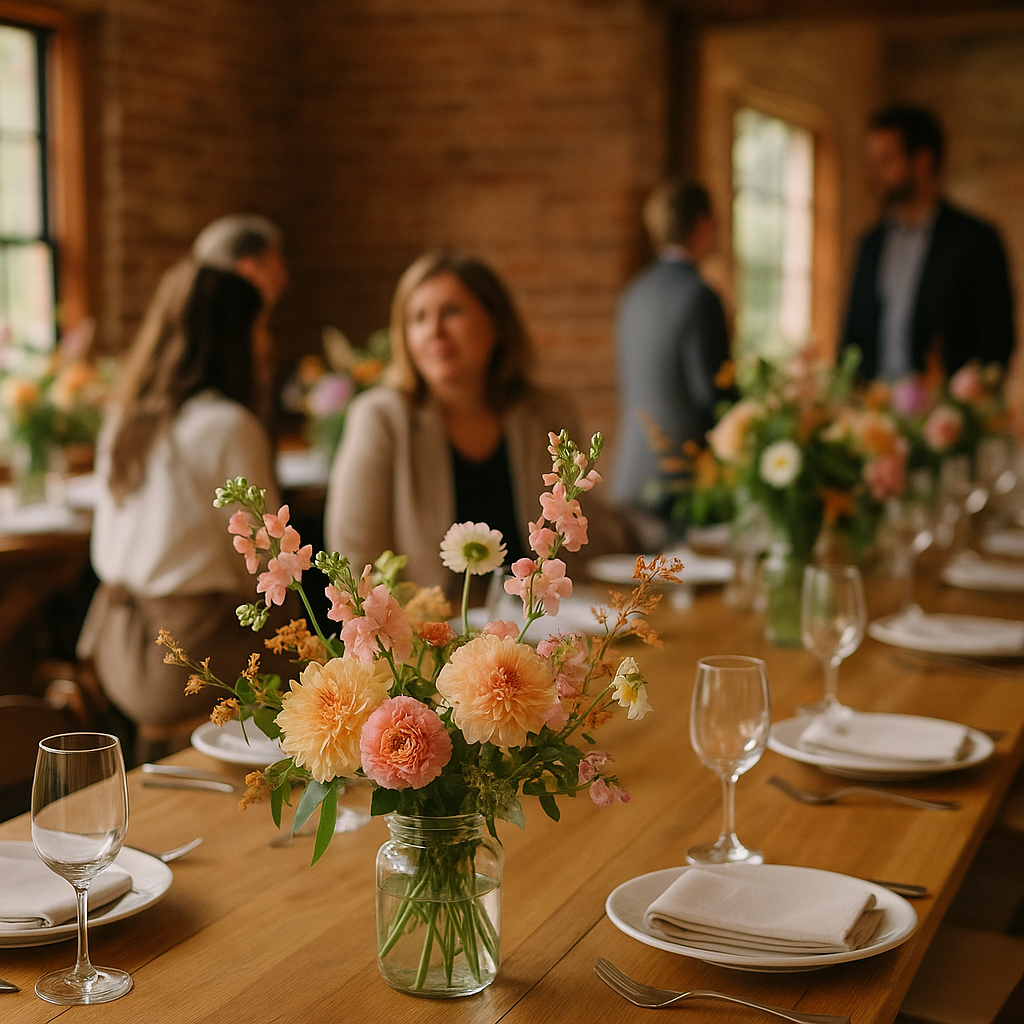
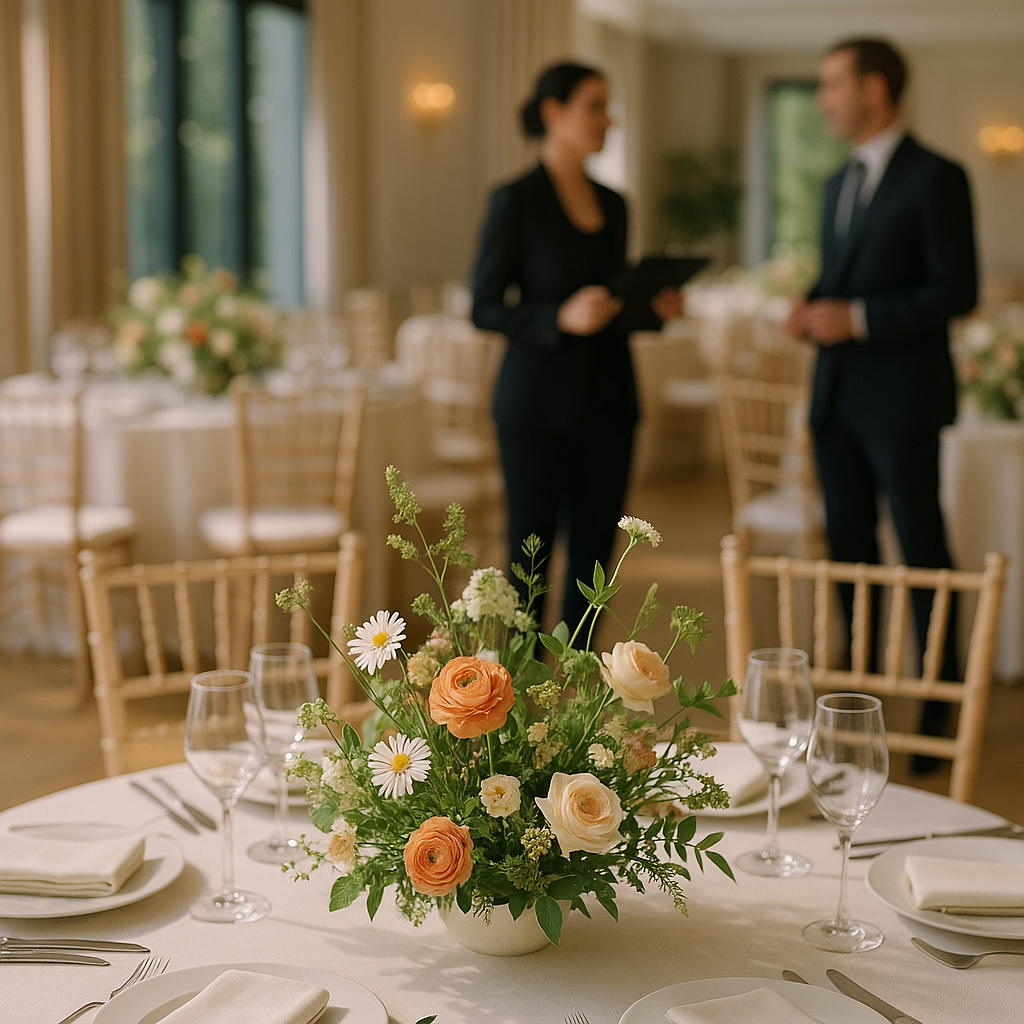
- Vases with clean water. This is the simplest option. Stems drink directly from the water, and the water can be refreshed.
- Tape grids. Waterproof floral tape is laid in a crosshatch over the vase opening to hold stems in position.
- Flower frogs (pin holders or kenzan). These are reusable metal or glass bases that sit under the waterline and anchor stems at an angle. They are ideal for low, airy, garden-style designs.
- Chicken wire. Wire balled inside a vessel creates a reusable framework for fuller arrangements.
- Natural structure. Branches, twigs, or a nest of stems can do the job of a grid.
- Water tubes. These give single stems their own water supply in spots a vase can’t reach.
The real advantages:
- The flowers and greenery can usually be composted without plastic fragments mixed in.
- Most of the mechanics are reusable from event to event.
- Many stems last at least as long in fresh vase water. One study cited by the Sustainable Floristry Network found foam shortened the vase life of cut roses.
- Loose, natural, garden-style designs, which are currently popular, suit foam-free methods especially well.
What Foam-Free Centerpieces Can't Do as Easily
To set honest expectations, these designs need more planning without foam:
- Extreme angles and shapes. Cascading, horizontal, or tightly sculpted designs, such as domes, spheres, and dense “flower walls,” depend on foam’s grip. Wire, armatures, and water tubes can get close, but they take more labor.
- Transport. An arrangement sitting in water can slosh, shift, or tip in a van. Many foam-free designs are better built or finished on site, which affects setup time.
- Very low or shallow pieces. Long, low runners and shallow trays hold little water. They may need hidden liners, frogs, or tubes.
- Labor and timing. Foam-free work can take more labor than cutting a brick. Whether it costs more or less depends on the design, the vessels, and whether the mechanics are reused.
Planning Foam-Free Centerpieces in South Florida
Local conditions change the practical details:
- Heat and humidity. Outdoor ceremonies and terrace receptions in Broward, Miami-Dade, and Palm Beach dry out flowers quickly. Choose heat-tolerant varieties, keep arrangements shaded until guests arrive, and make sure every vessel holds enough water for the full event.
- Wind. Waterfront and rooftop venues call for weighted, low-profile vessels. Tall, top-heavy pieces in water are more likely to tip.
- Setup windows. If designs will be finished on site, confirm load-in time, water access, and a work area with the venue in advance.
- Venue décor rules. Policies on open-flame candles near greenery, hanging installations, and table protection vary. Confirm them with the venue and, where required, the local fire authority having jurisdiction.
If Foam Is Used, Handle It Responsibly
Some pieces may still use foam, such as a large installation. In that case, ask your florist how it will be handled. Smithers-Oasis advises disposing of foam according to local regulations. The Sustainable Floristry Network recommends keeping foam out of compost and gardens, and not pouring foam-laden water into sinks or storm drains.
Disposal rules differ by city and hauler. Check with your local solid waste authority if you’re unsure.
Questions to Ask Your Florist or Planner
- Which pieces in my design need foam, and could any of them be done another way?
- Will arrangements be built in the studio or finished at the venue?
- Are the vessels and mechanics reusable or rented?
- What happens to the flowers and materials after the event?
When VNV Events styles your tables, our team can talk through these trade-offs early. That way the look you want and the mechanics behind it are settled before event day.
FAQs
1. Are foam-free centerpieces more expensive?
Not necessarily. Reusable vessels and mechanics can lower costs across multiple events. Designs that need on-site assembly or custom structures can add labor. Ask for a quote that compares both approaches for your specific design.
2. How do I keep flowers fresh without floral foam?
Start with clean vessels and fresh water, and recut stems before arranging. Keep arrangements cool and out of direct sun. For multi-day displays, refresh the water when you can.
3. Can I still use floral foam for some arrangements?
Yes. Floral foam is legal and widely sold. Some designers keep it for specific structural pieces and go foam-free everywhere else. If foam is used, confirm it will go in the trash and not into drains, soil, or compost.
4. Is “biodegradable” floral foam a good compromise?
It is better understood as a landfill product with manufacturer-tested breakdown rates, not a compostable one. Ask how it should be disposed of and what the claim is based on.
Visuals