How Loud Is Too Loud on the Dance Floor? What the WHO Safe Listening Standard Means for Your Event
The Short Answer
The World Health Organization's Global Standard for Safe Listening Venues and Events (2022) sets an upper limit of 100 dB LAeq averaged over any 15-minute period for audiences at events with amplified music. That number is a ceiling, not a target. A great dance floor at a wedding, gala, or corporate party rarely needs to get close to it.
A common misconception is that WHO caps event sound at 85 dB. It does not. The 85 dB figure comes from U.S. workplace noise guidance, which matters for your DJ, bartenders, and servers. We explain both below.
What the WHO Standard Actually Says
WHO developed the standard under its Make Listening Safe initiative. It applies to settings such as nightclubs, bars, concerts, and festivals, and the same logic carries over to private events with a DJ or live band. The standard has six features:
- Sound level limit: keep the average at or below 100 dB LAeq over 15 minutes.
- Live monitoring: measure and record sound levels during the event, using calibrated equipment and a designated person.
- Optimized acoustics and sound system: design and position the system so that clear sound reaches the audience without excessive volume.
- Personal hearing protection: make earplugs available to guests, with instructions.
- Quiet zones: give guests somewhere to rest their ears.
- Training and information: make sure staff and audiences know the practical steps for safer listening.
WHO also says plainly that the 100 dB limit cannot eliminate all risk, especially for people who attend loud events often. The CDC's 2023 report on safe listening at venues repeats that caution. The standard is designed to remove unnecessarily hazardous levels while keeping the music enjoyable.
Reading the Numbers Without the Jargon
- "LAeq, 15 min" is the average sound level over a rolling 15-minute window, weighted to match how human ears perceive sound. A single loud drop won't break the limit. Running loud for most of a set will.
- Decibels climb fast. Every 3 dB increase roughly doubles the sound energy reaching the ear. That means 100 dB carries about twice the energy of 97 dB.
- Time matters as much as volume. Under the criteria used by the National Institute for Occupational Safety and Health (NIOSH), 85 dBA is the recommended limit over 8 hours, and the allowable time halves with each 3 dB increase. At 100 dBA, NIOSH's recommended limit is less than 15 minutes per day, according to OSHA's noise overview. A four-hour reception held at the WHO ceiling would exceed that by a wide margin.
Don't Forget the People Working the Event
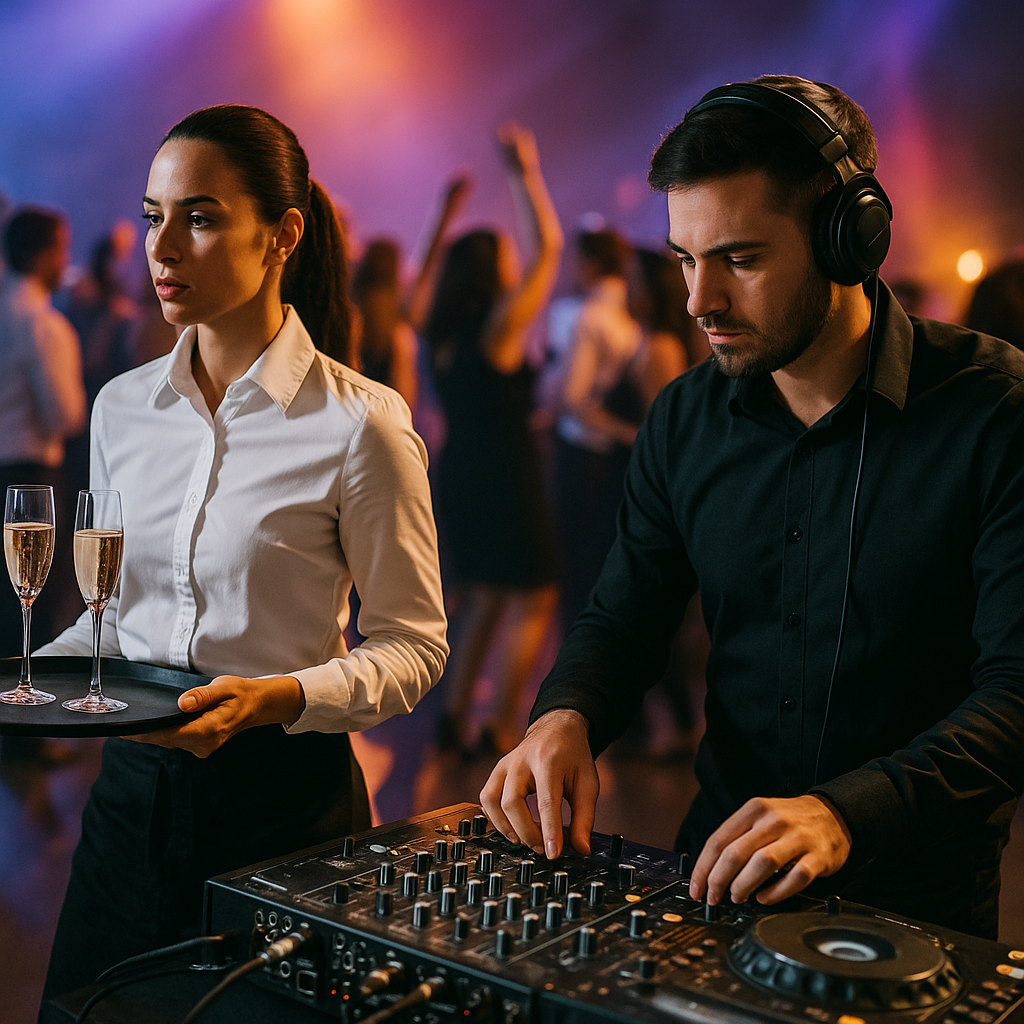
Your DJ, AV crew, bartenders, and servers are on site for the whole event, often near the speakers. In the U.S., workplace noise follows OSHA rules, not WHO. OSHA sets a permissible exposure limit of 90 dBA over an 8-hour workday. Employers must run a hearing conservation program once exposure reaches 85 dBA averaged over 8 hours. NIOSH recommends the more protective limit of 85 dBA with a 3 dB exchange rate. A sound plan that protects guests also helps protect your vendors.
Family Events and Young Guests
Kids' ears need a lower ceiling. For venues or events aimed specifically at children, the WHO standard calls for averages of no more than 94 dB LAeq, 15 min, and recommends 90 dB or lower for events aimed at young children. The American Academy of Otolaryngology–Head and Neck Surgery reflects the same figures. A wedding or quinceañera isn't a "children's event," but if little ones will be on the dance floor, have kid-sized earmuffs on hand and seat families away from the main speakers.
What This Means for Weddings, Galas, and Corporate Events
Most private events have phases, and each needs a different volume:
- Cocktail hour and dinner: background music should let guests talk at a normal volume across the table. This is when people catch up, give toasts, and network.
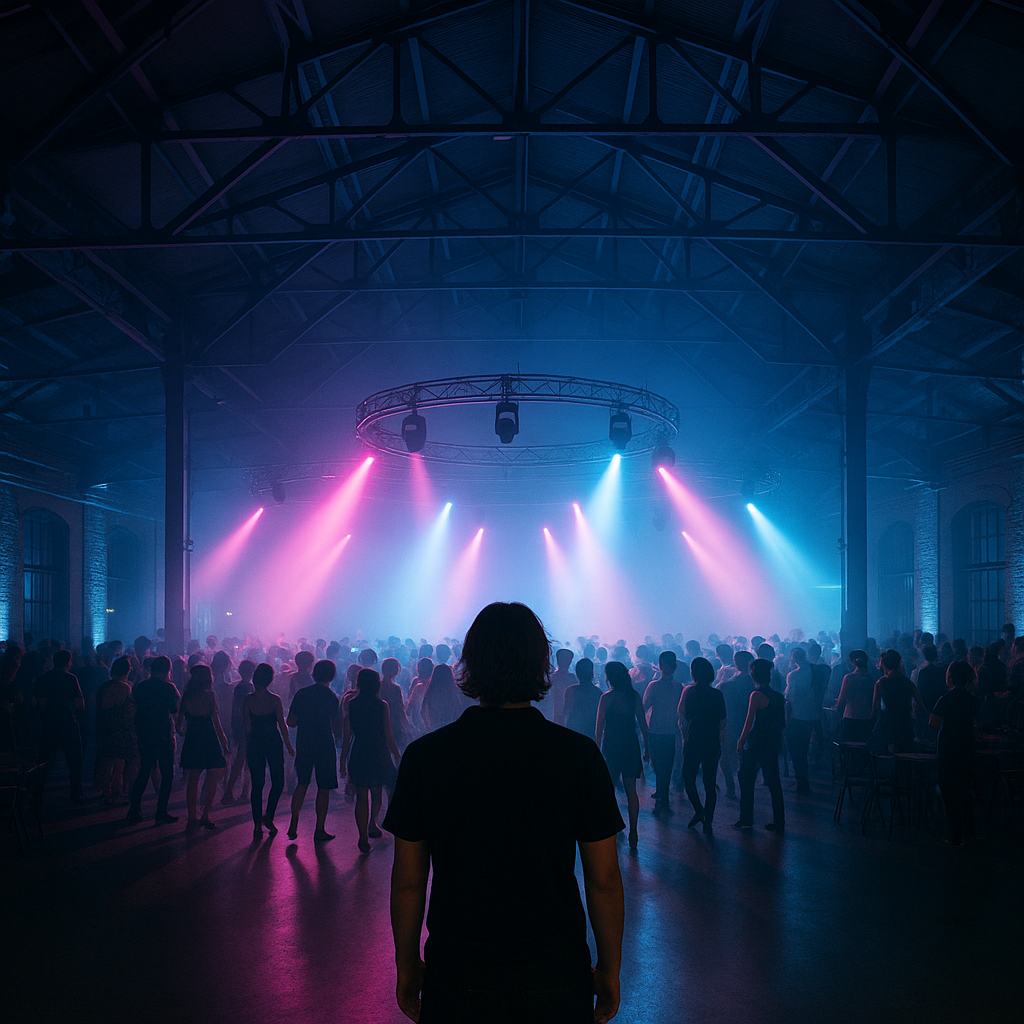
- Open dancing: energy can rise, but bass and clarity do more for a packed floor than raw volume. A well-tuned system at a moderate level usually feels better than an overdriven one at a high level.
- Late night: this is when levels tend to creep up as the crowd thins and the DJ pushes the room. It's also when guests have already had hours of exposure, so it's a good moment to check the meter.
A Practical Sound Checklist for Planners
- Ask your DJ or AV provider how they monitor levels. A calibrated sound level meter at the mix position, reading LAeq, is the professional approach. Phone apps can give a rough sense but vary widely in accuracy.
- Plan speaker placement with the floor plan. Point the mains at the dance floor, not at dinner tables. Keep older guests, families with kids, and the head table out of the direct path of the speakers.
- Create a quiet zone. A lounge, patio, or bar area away from the speakers gives guests somewhere to talk and rest their ears without leaving the party.
- Offer earplugs. A small basket at the bar or welcome table is low-cost, discreet, and in line with the WHO standard.
- Brief your team. Make sure the DJ, venue coordinator, and lead planner agree on who can ask for the volume to come down, and when.
- Confirm venue and local rules early. Many South Florida venues set their own decibel limits, use sound limiters, or enforce music curfews, especially outdoors and near homes. Noise ordinances also differ by city and county across Broward, Miami-Dade, and Palm Beach. Confirm the specific requirements with your venue and the local authority with jurisdiction before you finalize the timeline.
FAQs About Dance Floor Sound Levels
What should the sound level be for a dance floor?
There's no single official "ideal" number. The WHO standard caps the 15-minute average at 100 dB for audiences, and 94 dB or lower for events aimed at children. Most private events feel energetic well below that ceiling. The goal is a level that fills the floor without forcing guests to shout or step outside to talk.
How can I monitor sound levels during my event?
Ask your sound provider to use a calibrated sound level meter that reports LAeq, positioned at a consistent reference point such as the mix position, and to check it throughout the night. WHO recommends that someone be responsible for monitoring and that levels be recorded.
What are signs that the volume is too loud?
One common rule of thumb: if guests have to raise their voices to talk to someone an arm's length away, the level is likely high enough to be hazardous over time. Other signs include guests avoiding the area near the speakers, older relatives leaving the room, people covering their ears, and guests reporting ringing or muffled hearing afterward.
Do local noise laws apply to private events?
They can, especially for outdoor events and venues near homes. Rules on decibel limits and quiet hours vary by municipality and county. Your venue usually knows its requirements best, but confirm with the local authority if you're planning a backyard, waterfront, or other non-traditional site.
The Bottom Line
A memorable dance floor depends on music selection, sound quality, and room flow more than volume. Treat the WHO's 100 dB average as an upper limit, monitor levels with proper equipment, give guests a quiet place to step away, and confirm venue and local rules early. When you plan your event with VNV Events, our team can help you coordinate speaker placement, quiet zones, and volume expectations with your DJ and venue, so the energy stays high and your guests go home with great memories instead of ringing ears.
Visuals