
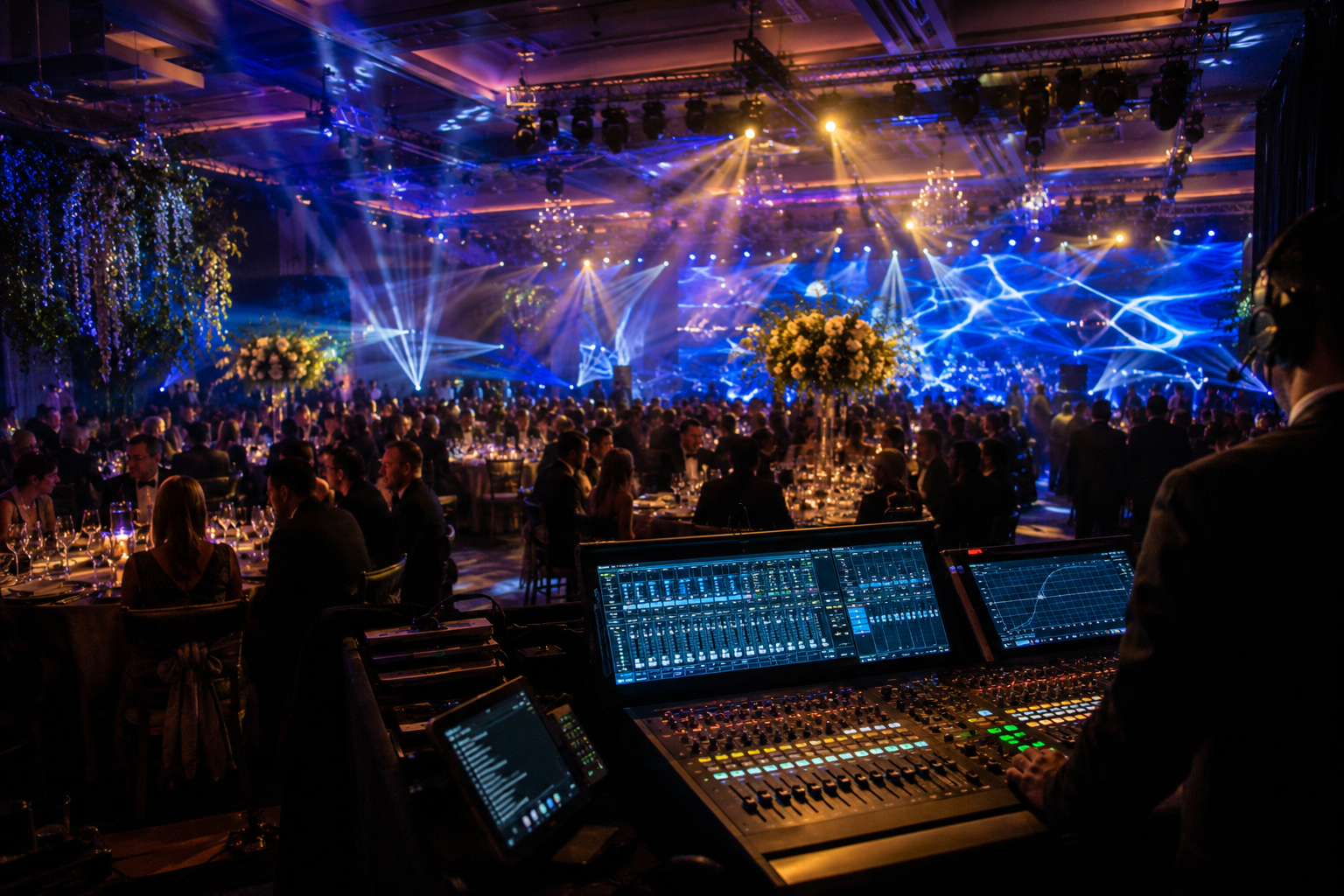
The Science Behind the Atmosphere
The Impact of Sound Design on Event Atmosphere
Sound design plays a crucial role in shaping the atmosphere of any event. From corporate gatherings to weddings, the right auditory elements can elevate the overall experience for attendees. This isn't just a matter of taste — research on music tempo has found it can shift measurable outcomes like spending and dwell time by as much as 40%, according to Caldwell and Hibbert's widely cited study on music tempo and consumer behavior, published in Psychology & Marketing.
Understanding Sound Design in Events
Sound design plays a crucial role in shaping the atmosphere of any event. From corporate gatherings to weddings, the right auditory elements can elevate the overall experience for attendees. The effect goes beyond simple mood-setting — a peer-reviewed ScienceDirect study on background music and consumer response notes that among all musical elements, tempo appears to most strongly influence cognition, emotion, and behavior in a shared space.
The Psychology of Sound
Sound has a profound impact on human emotions and behavior. Here are a few ways sound design influences audience engagement:
- Emotional Connection: Specific soundscapes can evoke feelings of nostalgia, joy, or excitement. Research published in Nature's Scientific Reports using EEG data confirms that fast tempo is strongly associated with happy and energized emotional states, while slow tempo more reliably triggers calm or reflective ones — a distinction worth planning around for different moments of an event.
- Attention Management: Strategic audio cues can guide attention, signaling important moments or transitions. Physiological research published in Frontiers in Psychology found that measurable shifts in listener arousal — heart rate and skin conductance changes — coincide with sudden changes in volume or tempo, which is precisely why a well-timed music cue can land so effectively at a key moment like an entrance or toast.
- Brand Identity: Customized sound design reinforces brand messaging and enhances recognition.
Key Elements of Effective Sound Design
To create an immersive auditory experience, consider the following elements:
- Ambient Sound: Background audio that complements the event theme without overwhelming conversation. Slower-tempo, lower-volume music has been shown to make a shared space feel more elegant and to extend how long guests linger, according to SoundMachine's 2025 analysis of volume and tempo in hospitality settings — useful for cocktail hours or networking segments where you want conversation, not urgency.
- Live Music: Incorporating live performances can create a more dynamic atmosphere.
- Sound Effects: Subtle sound effects can enhance storytelling and engage participants.
Volume matters as much as tempo. If ambient music is too loud, guests end up raising their voices just to be heard, which undercuts the very networking or conversation an event is often designed to encourage — while music that's too quiet can make a room feel awkwardly empty during slower moments. Calibrating both together, rather than picking one "right" volume for the whole night, tends to produce the best result across a room's different phases.
For more insights on event planning and to discover professional DJ and Karaoke Services or explore our Event Production options, visit VNV Events in Miami.
What other experts and communities are saying
These outside references helped shape the recommendations in this article. The goal isn't to repeat them, but to translate their most useful signals into practical planning advice.
- The Influence of Music Tempo and Musical Preference on Restaurant Patrons' Behavior — Caldwell & Hibbert, Psychology & Marketing
Referenced from researchgate.net: Music preference predicted dwell time and spending in a shared space even more reliably than tempo alone, though slower tempo consistently correlated with longer stays.
The useful point for this page is that matching the music to the actual audience's taste matters as much as picking a "correct" tempo formula.
- Music Tempo Modulates Emotional States as Revealed Through EEG Insights — Scientific Reports (Nature)
Referenced from nature.com: Fast tempo music is strongly associated with happy and energized emotional states, while slow tempo more reliably triggers calm or reflective ones, based on EEG measurement.
The useful point is giving event planners a physiological basis for sequencing music by the mood each part of an event needs, not just personal preference.
- How Volume and Tempo Influence Dining Behavior — SoundMachine
Referenced from sound-machine.com: The right combination of music volume and tempo can encourage longer stays, faster turnover, or a more relaxed atmosphere, depending on what a host is trying to achieve.
The useful point is showing that sound design is a controllable lever for shaping guest behavior, not just background decoration.
FAQs about Sound Design
How does sound design affect the mood of an event?
Sound design can significantly influence the mood by setting a tone that aligns with the event's purpose and theme — research consistently links faster tempo to higher energy and slower tempo to calmer, more reflective states.
Can sound design be customized for different events?
Absolutely! Tailoring sound design to the specific needs of an event — and to the actual musical taste of the guest list, not just a generic tempo formula — can enhance the overall experience and audience engagement.
What are some common sound design mistakes to avoid?
Common mistakes include overly loud music, poor quality audio equipment, and neglecting the acoustics of the venue. Volume that forces guests to raise their voices to talk is one of the most common — and most avoidable — sound design failures at events.
Let VNV Events Design Your Event's Soundscape
From ambient cocktail-hour playlists to a packed dance floor, our team designs sound that matches every phase of your event. Explore our DJ and Karaoke Services or Event Production options today.