
The Caviar Bump: What It Is, Why It Blew Up, and How We Serve It Without Making It a Frat Party
VNV Events
The Caviar Bump: What It Is, Why It Blew Up, and How We Serve It Without Making It a Frat Party
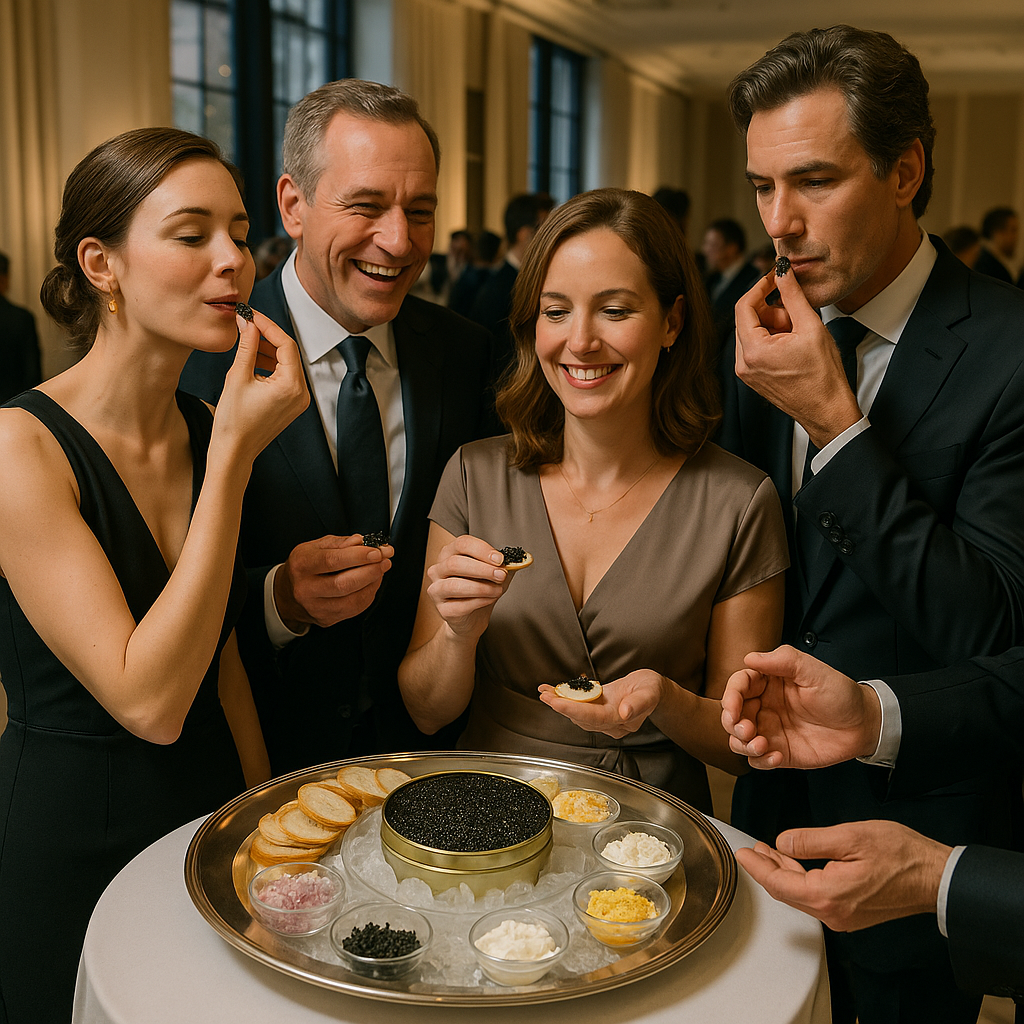
Let's define it before we defend it. A caviar bump is a small portion of roe — roughly a quarter to half a teaspoon — placed in the webbing between your thumb and index finger and eaten in one motion. No blini, no toast point, no spoon in the mouth. Often followed by a sip of ice-cold vodka. The name and the gesture are why hosts get nervous about it, and that nervousness is understandable. What most people don't know is that it started in professional kitchens, not on TikTok, and understanding that is exactly how you serve it at a wedding without the room feeling like a bachelor party.
It's a tasting technique that escaped the kitchen
This is the fact that changes the conversation with a hesitant client.
Caviar Market's explanation is direct: the practice did not begin as a trend but in professional kitchens and tasting rooms, where chefs and buyers needed a quick, neutral way to assess quality without a full setup. The hand's placement is deliberate — the area between thumb and index finger is warm enough to release aroma while staying clean enough to keep the taste honest.
Hey Caviar frames why it works technically: skin warmth releases the aroma, metal contact is eliminated entirely, and there's no base underneath masking the flavor. Imperia Caviar describes the same mechanism — the pearls burst against the tongue, and the skin's warmth softens the texture just enough to bring out the roe's natural character.
In other words, the bump is the answer to the same problem we wrote about in our piece on metal spoons. It isn't a shortcut around etiquette. It's the most unmediated way to taste the product, which is why the people who buy caviar for a living have always done it.
Why it blew up
Three forces, and only one of them is social media.
The visual is irresistible. Forbes documented the trend racking up millions of views on TikTok, with restaurants adding it to menus — José Andrés's Nubeluz at the Ritz-Carlton New York NoMad began serving bumps as a few grams of Ossetra. Hey Caviar's read on the virality is that the appeal was the contrast: something that looks expensive and intimidating, consumed in the most casual, tactile way possible.
It lowers the barrier. Caviar Market makes an observation worth sitting with — younger diners appreciate rituals that feel less rigid, and the bump signals that you can enjoy fine roe without memorizing a set of etiquette rules. For a lot of people it's their first genuine encounter with caviar culture.
The economics changed underneath it. The Week points to the ban on wild caviar in 2006 and the normalization of sustainable farming worldwide, which widened the supplier base and improved affordability — noting that an entry-level 10g tin is enough for bumps for four people. The trend didn't create accessibility. Accessibility created the trend.
The problem, named honestly
The word "bump" borrows from drug slang, and the gesture visually echoes it. That's a real part of why the trend spread, and it's the entire reason a mother of the bride will hesitate when you propose it.
Pretending otherwise doesn't help anyone. The way to serve this at a wedding, a corporate reception, or a milestone celebration isn't to hope nobody notices the association. It's to change three things about the execution so the association never surfaces.
How we actually run it
1. An attendant places every bump
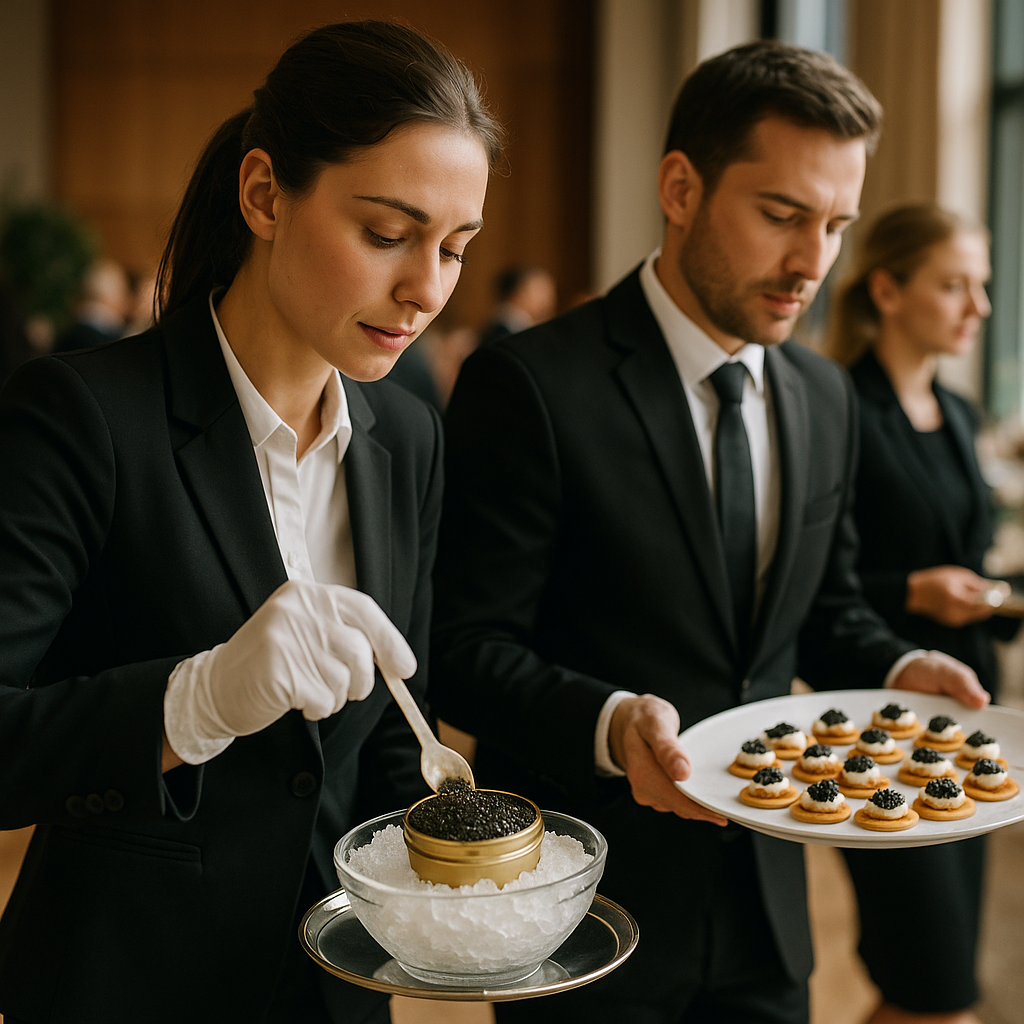
Nobody reaches into a communal tin. A staff member scoops with a mother-of-pearl or plastic spoon — Caviar Market specifies exactly this — and places the portion on the guest's hand. That single decision solves four problems at once: portion control, hygiene, hesitation from first-timers, and tone. A served bump reads as service. A self-serve tin reads as a dare.
2. Clean-skin protocol, stated out loud
Caviar Market's guidance is specific: hands washed and dried thoroughly, and no perfume or lotion, because both interfere with the taste. We put a small water station beside the caviar and the staff mention it in one sentence. It takes three seconds and it reframes the whole thing as a tasting protocol rather than a stunt — which is precisely what it is.
3. The drink comes after, and it's poured, not shot
Caviar Market's tasting instruction is that you sip after you swallow the roe, not before, so the finish settles clean. Their pairing list is worth following: ice-cold vodka with a clean neutral profile, brut Champagne with high acidity, dry sparkling wine, or still mineral water when you want no distraction.
A small chilled pour handed to the guest after the bite is a pairing. A tray of shot glasses is a different event. Same ingredients, opposite room.
The rest of the setup
- Temperature. Caviar Market specifies holding the tin between 28 and 34°F until serving. Quality and temperature matter more than theatrics.
- Portion. A quarter to half a teaspoon. Enough to taste properly, small enough that a guest comes back rather than feels they've committed.
- Eat immediately. Lean forward and take it while it's still cool — the technique depends on the roe being cold when it hits the tongue.
- Run it alongside classic service, not instead of it. Caviar Market's framing is that the bump expands the language of caviar rather than replacing traditional presentation — taste a small amount on the hand to understand it, then serve the rest with chilled vodka, crème fraîche, and warm blinis. One informs the other.
[TITULO DEL CASO REAL]
[Contexto del evento y la duda inicial del cliente.] [Cómo lo montamos.] [Reacción.]
When to offer it, and when not to
Works well: cocktail hour, rooftop and lounge settings, brand activations, milestone birthdays, and any event where guests are standing and circulating. Imperia Caviar captures the range — at a private gathering it feels like a shared secret among friends; in an upscale bar it becomes part of the entertainment.
Skip it: seated dinners, where it interrupts service and strands guests mid-course. Conservative corporate audiences, unless you know the room. And any event where a significant part of the guest list will read the gesture rather than the technique — in which case run classic service and offer bumps quietly to the guests who ask.
One more consideration from Caviar Market worth planning around: the shock factor is what will fade. Once something becomes familiar it stops feeling provocative, while the tasting method itself will persist because its roots are practical. If you're booking it purely because it's edgy, you're buying the part with the shortest shelf life.
Frequently Asked Questions
What is a caviar bump?
A small portion of sturgeon caviar — roughly a quarter to half a teaspoon — placed in the webbing between the thumb and index finger and eaten in one motion, with no spoon in the mouth and no base underneath. The skin's warmth releases aroma and there's no metal contact to interfere with flavor. It's often followed by a sip of ice-cold vodka or brut Champagne.
Where did the caviar bump come from?
Professional kitchens and tasting rooms. Chefs and caviar buyers needed a fast, neutral way to evaluate quality without a full service setup, and tasting from the hand removed both metal contact and any accompaniment that could mask the flavor. Social media brought an existing insider technique into nightlife and restaurant culture.
Is it appropriate at a wedding or corporate event?
It depends entirely on execution. Attendant-served with portion control, a clean-hands protocol, and a poured pairing afterward, it reads as a tasting experience. Left as a self-serve tin with a tray of shots, it reads very differently. For conservative rooms, run classic service and offer bumps to guests who ask.
Is it hygienic?
When it's run properly, yes. Guests wash and dry their hands beforehand and skip perfume and lotion, an attendant places each portion with a non-reactive spoon so nobody touches the tin, and each bump is a single serving eaten immediately. Those steps come straight from standard tasting practice.
What should you drink with a caviar bump?
Ice-cold vodka with a clean neutral profile, brut Champagne with high acidity, dry sparkling wine, or still mineral water for no distraction. The order matters: sip after you've swallowed the roe rather than before, so the finish stays clean.
Does the bump replace traditional caviar service?
No, and it works best alongside it. Use a bump so guests can taste the roe on its own and understand it, then serve the rest classically with crème fraîche, blinis, and chilled pairings. Each format makes the other more interesting.
Sources
- Caviar Market — The Caviar Bump Trend Explained
- Caviar Market — Caviar Bump Etiquette and Pairings
- Imperia Caviar — The Caviar Bump Trend Explained
- Hey Caviar — What Is a Caviar Bump and How to Do It Right
- Forbes — The Caviar Craze and High-Low Food Combinations
- The Week — How Caviar Went Mainstream
- Opus Caviar — Caviar Bump: Luxury Tasting Trend Explained
- Caviar Star — How to Eat and Serve Caviar Like a Pro
We'll tell you if your room is right for it
Describe the event and the guest list. We'll tell you whether bumps fit, how we'd staff it, and when classic service is the better call. Around 200 events a year across Broward, Miami-Dade, and Palm Beach.
Request a Quote