
The Song You Danced To Might Not Survive Your Wedding Film
You picked the song in a parking lot on the way home from a tasting. It played at 9:40 p.m., the floor cleared, your grandmother cried, and the videographer got the whole thing on two cameras. Eleven months later you upload the highlight reel so the family in Bogotá and Amsterdam can finally see it — and the first dance plays in silence. Not the ceremony. Not the toasts. Just the ninety seconds that mattered most, muted by a machine that never watched the video.
That outcome is not a mistake, a glitch, or bad luck. It is the predictable result of a decision nobody made out loud during planning: which song goes into the edit, as opposed to which song plays in the room. Those are two entirely different legal events, and only one of them is covered by the licenses your venue and your DJ already carry.
The song in the room and the song in the file are governed by different rights
When your DJ plays a track at your reception, that is a public performance. Performing rights organizations license that use in bulk, and the venue or the entertainment provider typically holds it. But the moment that same recording is laid under picture and exported as a file, you are no longer performing music — you are reproducing it in timed relation to images. That is a synchronization use, and ASCAP states the split plainly in its own guidance for filmmakers: a synchronization license must be obtained from the owner of the musical work, usually the publisher, and a separate master use license is needed from the owner of the specific recording.
So a commercially released song carries two locks, not one:
- The composition — the melody and lyrics, controlled by the songwriters and their publisher(s). A single pop song can have five or more co-writers across three publishers, each of whom has to say yes.
- The master recording — the specific studio version everyone recognizes, controlled by the label or the artist's rights administrator.
There is also no fallback rate card. The compulsory mechanical license that lets anyone record a cover version does not reach into video at all: the Copyright Office notes in Circular 73A that a phonorecord does not include sounds accompanying a motion picture or other audiovisual work. Buying the song, streaming it, or paying a mechanical royalty does not produce sync rights. Every sync clearance is negotiated one at a time, or it does not exist.
What actually happens when the file goes up
Nobody sues a bride. What happens is quieter and, for most couples, worse: the film survives and the audio does not. Every major platform now fingerprints uploads automatically and hands the decision to the rights holder.
| Platform | How detection works | What you can be left with |
|---|---|---|
| YouTube | Content ID matches the audio against reference files supplied by rights holders. The owner then applies a monetize, track or block policy — YouTube does not mediate the dispute. | Ads placed on your wedding film with revenue going to the label; or, where the policy is block, a video that may be muted or entirely unavailable, sometimes only in certain countries. |
| Vimeo | Videos are scanned automatically and set to private when matching material is found — and Vimeo notes this can happen at any point after upload, not only on day one. | A link that quietly stops working for everyone but you. Your options become replace the video, swap the audio using their library, delete the audio, or appeal. |
| Facebook & Instagram | Rights Manager matches audio across both platforms. Meta's Music Guidelines warn that the greater the density of music in a video, the more likely it is to be limited. | Muted playback, regional blocking, or reduced distribution — on a highlight reel that is, by design, almost wall-to-wall music. |
Two details matter more than couples expect. First, a Content ID claim is not a copyright strike and does not mean anyone accused you of anything — but it still controls whether your guests hear the song. Second, a policy that allowed the track last year can be changed later; YouTube explicitly warns that a video's status can change and that it may even be removed.
Four beliefs that reliably cost couples their audio
- "We only used fifteen seconds." There is no safe-duration rule. The Copyright Office is unambiguous: no legal rule permits the use of a specific number of words, a certain number of musical notes, or a percentage of a work, and fair use under section 107 is a four-factor judgment made case by case, not a checkbox you can tick before uploading.
- "We credited the artist in the caption." Attribution is sometimes a condition of a license. It is never a substitute for one.
- "It's private / unlisted / password-protected, so it doesn't count." Detection systems scan what is uploaded, not what is popular. Vimeo says outright that content may be scanned and restricted at any point.
- "Our videographer handles that." Sometimes true, usually not. Read the contract. Most wedding film agreements place responsibility for third-party music squarely on the client, or restrict delivery to pre-licensed catalog tracks.
If a rights holder does escalate beyond a platform claim, the statute is not gentle: section 504(c) allows statutory damages between $750 and $30,000 per work, rising to as much as $150,000 for infringement found to be willful. That is rare for a family wedding video and common for anything that looks commercial — which is exactly why the line between your keepsake film and a vendor's promotional reel needs to be drawn before the edit begins, not after.
This is general information about how music rights work in video, not legal advice. Licensing questions about a specific song, contract or use should go to a qualified attorney.
The fix is a delivery plan, not a licensing hunt
Chasing publisher and label clearance for one pop record, for one family film, is almost never a workable path. The practical move is to stop treating "the wedding video" as a single object. It is three or four deliverables with different audiences and different risk profiles, and each one gets its own audio decision — made during planning, with the same seriousness as the timeline.
| Deliverable | Where it lives | Audio approach to lock in advance |
|---|---|---|
| Highlight reel (3–6 min) | Public: social, YouTube, sent to everyone | Licensed catalog music chosen for tempo and emotional arc. Keep the license certificate and receipt on file. |
| Full ceremony | Semi-private link for family who couldn't travel | Live audio as captured — vows, officiant, processional played in the room. Music-under is the exposure, not speech. |
| Full reception / documentary cut | Private archive copy for you | Real room audio, delivered as a file rather than pushed to a platform that will scan it. |
| Vendor promo clips | Commercial use by any supplier | Licensed music only, cleared for commercial use — a personal-use library track is not enough here. |
Getting that right depends on capture, not just editing. Clean, isolated audio from the ceremony and the toasts is what makes a "live audio" cut watchable in the first place, which is a production and audio capture and coordination decision made weeks earlier — mic placement, a board feed from the DJ, redundant recorders on the officiant. When your photography and videography team and the people running the live music and sound in the room are planned together, the editor inherits real options instead of one stereo mix with a pop record baked into it.
Settle these five things before the wedding day
- Name the deliverables. How many cuts, who sees each one, and where each one gets posted.
- Read the music clause. Does your contract commit the editor to a licensed library, or does it hand you the risk?
- Approve the licensed tracks by name. Listen to three candidates for the first-dance sequence before the wedding. Choosing under deadline, after the fact, is how couples end up with music they never wanted.
- Ask who keeps the paperwork. If a claim appears, platforms will ask for a license document, EULA or receipt naming the licensee. Someone should be able to produce it in ten minutes, not ten days.
- Decide about your song deliberately. Keep the real recording in the private archive cut, choose something licensed for the public one, and go into the edit knowing which is which.
Questions couples ask once the claim email arrives
What exactly is a sync license?
Permission to pair a musical work with moving images. It covers the composition and comes from the publisher; using the famous recording of that composition requires a second permission, the master use license, from the label. Both are negotiated individually. Neither is available at a fixed statutory rate.
Our DJ and venue already pay for music. Why isn't that enough?
Those licenses cover public performance — playing music to a room. They do not authorize copying a recording into a video file. ASCAP says directly that it does not license the right to record music as part of an audiovisual work.
Does making the video private or unlisted solve it?
It changes who sees the film, not whether the audio gets fingerprinted. Automated scanning runs on upload, and Vimeo warns that videos can be set to private at any point after that. A private file kept off platforms behaves differently from a private link on a platform.
Is a Content ID claim a copyright strike?
No. Claims usually don't affect your account at all — the rights holder simply decides whether the video is monetized, tracked, or blocked. But "blocked" can mean muted or unavailable, which is the outcome that ruins the film.
Can properly licensed music still get flagged?
Yes. Library composers often register their own tracks with detection systems, so a match can appear even when you hold a valid license. This is a paperwork problem rather than a rights problem — which is why keeping the license certificate matters.
Can we ever get our actual first dance song into the public cut?
Only with clearance from both the publisher and the label. It's worth asking if the song is by an independent artist who controls both copyrights, since a single conversation can settle it. For a major-label release, plan for a licensed alternative and keep the original in your private archive cut.
From the edit suite
Decide it now, while the decision is still cheap
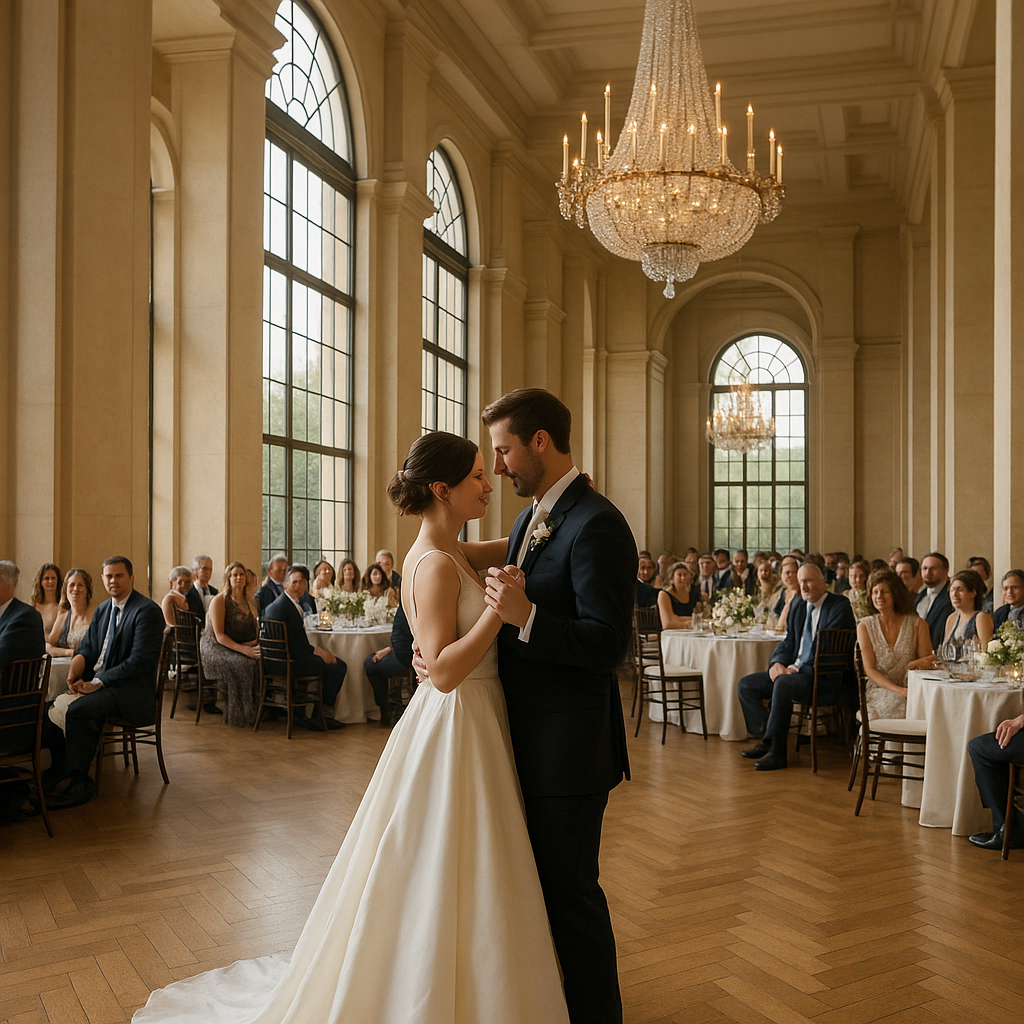
The song that played at 9:40 p.m. is already yours. Nothing takes that away. What's still open is whether the version of your wedding that travels — the one that gets texted to cousins, replayed on anniversaries, and watched by people who couldn't be there — arrives with sound or without it. That is decided in a planning conversation months before anyone touches a timeline, and it costs nothing but ten minutes of attention. Make the call while you can still choose the music. After the export, the machine chooses for you.
Plan the audio before you plan the edit
Talk to VNV Events about how your ceremony and reception sound will be captured, which cuts you'll receive, and which music goes into each one — so nothing important arrives silent.
Request a Quote