
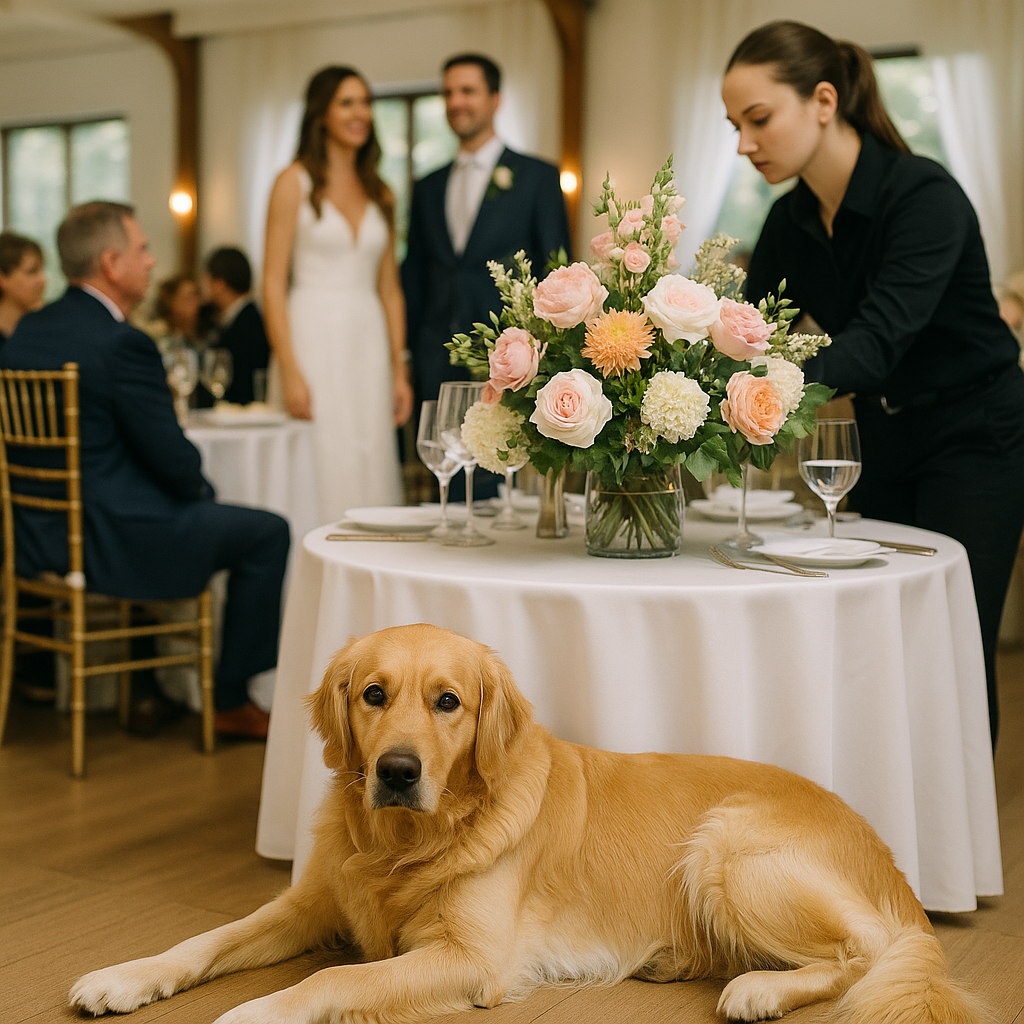
Dogs at the Wedding? Centerpiece Flowers That Are Toxic to Pets
Picture it. The ring bearer is a golden retriever in a bow tie. The ceremony goes perfectly. Then during cocktail hour, someone notices him nose-deep in a low centerpiece, chewing on a eucalyptus sprig.
Most couples who bring a dog to their wedding think about the leash, the handler, and the photo timing. Very few think about the flowers. They should. Some of the most popular wedding blooms and greenery are on the ASPCA's toxic list, and one flower in particular can kill a cat that never even sets foot at your venue.
This guide covers which centerpiece flowers are risky, which swaps hold up, and what to plan before the day so nobody spends the reception at an emergency vet.
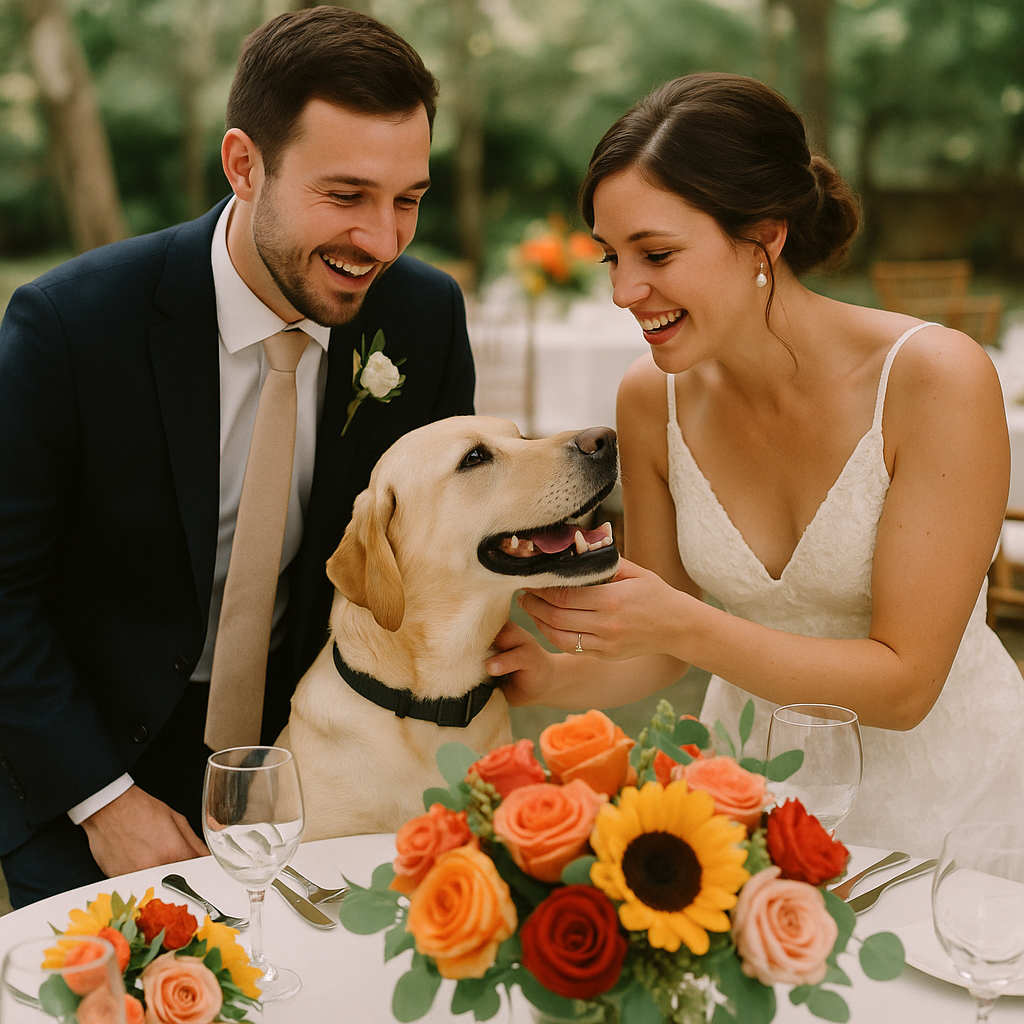
The Lily Problem: Why Cats Matter Even If Only Your Dog Is Invited
Lilies are the flower to rule out first, and cats are the reason.
According to the FDA, every part of a "true lily" or daylily is toxic to cats: petals, leaves, stem, pollen, and even the vase water. A cat that chews a bit of a petal, licks pollen off its fur, or drinks from the vase can develop fatal kidney failure in under three days. The FDA's high-risk list includes Asiatic, Easter, Oriental, stargazer, tiger, and rubrum lilies, which covers most of what shows up in wedding arrangements.
For dogs, the picture is different. The same FDA guidance says dogs that eat true lilies may get a minor upset stomach but do not develop kidney failure.
So why should a dog-only wedding care? Because centerpieces go home. Guests take them at the end of the night, and they end up on kitchen counters in houses with cats. If you are planning a "take a centerpiece home" moment, lilies turn a nice gesture into a real risk for someone else's pet.
Two lily-adjacent flowers deserve their own flag:
- Lily of the valley is not a true lily, but the FDA warns it is very dangerous to both cats and dogs because it can trigger life-threatening abnormal heart rhythms. It is a classic bridal bouquet flower, so check bouquets too, not just tables.
- Calla lilies contain insoluble calcium oxalate crystals. The FDA describes mouth pain, drooling, pawing at the face, and vomiting in cats and dogs that chew them. Signs usually resolve on their own, but it is not how you want your dog spending the toasts.
Other Popular Wedding Flowers on the Toxic List
Lilies get the headlines. These show up in centerpieces just as often:
- Eucalyptus: The greenery in half of all modern centerpieces. The ASPCA lists it as toxic to dogs and cats, with drooling, vomiting, diarrhea, and weakness as possible signs. It is easy to overlook because it is "just filler."
- Hydrangea: A centerpiece staple. The ASPCA notes it can cause vomiting, diarrhea, and depression in pets.
- Peony: Toxic to dogs and cats, with vomiting, diarrhea, and lethargy listed by the ASPCA.
- Tulips: The ASPCA lists them as toxic, with the highest concentration of toxin in the bulb. Potted or bulb-on displays are the bigger concern.
- Daffodils: Large ingestions can cause tremors, convulsions, and heart rhythm problems, and bulbs are the most poisonous part, per the ASPCA.
- Azalea and rhododendron: The same genus. The ASPCA lists vomiting, diarrhea, weakness, and potential cardiac failure.
- Foxglove: One of the most serious on this list. The ASPCA notes cardiac glycosides that can cause arrhythmias, cardiac failure, and death.
- Chrysanthemums: Common in fall weddings. Toxic to dogs and cats, with vomiting, drooling, and incoordination listed by the ASPCA.
- Carnations: Lower risk, but the ASPCA still lists them as toxic, causing mild stomach upset and skin irritation.
Pet-Friendly Wedding Flowers That Still Look Like a Wedding
The good news: you do not have to give up a lush look. These are listed as non-toxic to dogs and cats by the ASPCA:
- Roses: Non-toxic to dogs and cats. Ask your florist to strip thorns from anything at nose level.
- Sunflowers: Non-toxic, bold, and great for rustic or outdoor receptions.
- Gerbera daisies: Non-toxic, with a wide color range.
- Phalaenopsis (moth) orchids: Non-toxic, and elegant for modern or tropical tables. Ask for the specific orchid type; "orchid" covers a lot of plants.
- Snapdragons: The common snapdragon is non-toxic and gives you vertical height without foxglove.
- Baby's breath: Listed as non-toxic, though the ASPCA notes it may still cause mild vomiting or diarrhea if eaten.
One honest caveat: "non-toxic" does not mean "dog snack." Any plant material can upset a stomach, and a dog that eats a mouthful of stems, floral foam, or ribbon has a different problem entirely. Safe flowers lower the stakes. They do not replace supervision.
Quick Swap Guide for Your Florist Meeting
| If your design calls for… | Consider asking about… | Why |
|---|---|---|
| Stargazer or Asiatic lilies | Phalaenopsis orchids or roses | Removes the cat kidney-failure risk for guests taking arrangements home |
| Eucalyptus greenery | Ask your florist for a greenery option on the ASPCA non-toxic list | Eucalyptus is listed as toxic to dogs and cats |
| Foxglove or delphinium-style height | Snapdragons | Similar vertical shape without cardiac glycosides |
| Peonies or hydrangeas | Garden roses | Full, romantic look from a non-toxic flower |
| Fall mums | Sunflowers or gerbera daisies | Warm seasonal color, both non-toxic |
Before you sign off on a design, cross-check every flower and every piece of greenery in the ASPCA toxic and non-toxic plant database. Florists sometimes substitute stems last-minute based on availability, so ask them to confirm nothing on your "no" list gets swapped in.
Planning Decisions That Matter More Than the Flower List
Decide where the dog actually goes
A dog walking down the aisle for five minutes faces far less risk than a dog roaming the reception for four hours. If your pet is only in the ceremony and photos, you can focus your pet-safe choices on aisle arrangements, the arch, and anything used in portraits.
Assign one person to the dog
Not "the family." One named person whose only job during the dog's time at the event is the dog. They should know the flower situation and have the emergency numbers saved.
Watch centerpiece height
Low, lush centerpieces sit right at nose height for a medium or large dog. Tall arrangements on stands are harder to reach. If you keep any toxic flowers at all, put them up high and away from where the dog will be.
Think about what goes home
If guests take arrangements at the end of the night, skip true lilies entirely. You cannot know who has a cat at home.
Check the venue's own plants
Garden venues and indoor spaces often have their own landscaping and potted plants. Walk the space with your pet in mind, and look up anything you do not recognize in the ASPCA database.
If Your Pet Eats a Flower
Do not wait to see if symptoms show up. With lilies and cats, the FDA notes that if treatment is delayed 18 hours or more after ingestion, the kidney damage is generally irreversible.
- Call a veterinarian or a pet poison hotline right away. ASPCA Animal Poison Control is available 24/7 at (888) 426-4435; a consultation fee may apply. Pet Poison Helpline is also available 24/7 at (855) 764-7661.
- Take the flower with you, or photograph it. The FDA recommends bringing the plant or a phone photo so the vet can identify exactly what was eaten.
- Know your nearest emergency vet before the wedding. Look up the closest 24-hour animal hospital to your venue and give the address to your pet's handler.
FAQs
Are lilies toxic to dogs?
True lilies can upset a dog's stomach but do not cause the kidney failure they cause in cats, according to the FDA. Lily of the valley is the exception: it is dangerous to dogs and cats alike because of its effect on heart rhythm.
What are the safest flowers for a pet-friendly wedding?
Roses, sunflowers, gerbera daisies, Phalaenopsis orchids, and common snapdragons are all listed as non-toxic to dogs and cats in the ASPCA plant database.
Is eucalyptus safe around dogs?
No. The ASPCA lists eucalyptus as toxic to dogs and cats. Because it is so common as centerpiece greenery, it is worth asking about specifically.
Do I need a fully pet-safe floral design if my dog is only at the ceremony?
Not necessarily. Focus on the flowers your dog will be near: the aisle, the arch, and anything used in photos. Keep supervision tight. And skip true lilies anywhere arrangements might go home with guests.
The Bottom Line
Bringing your dog to your wedding is a great call. It just takes one extra conversation with your florist and one person on dog duty. Rule out lilies, flag the eucalyptus, pick from the non-toxic list, and save the poison hotline numbers. Then go enjoy the day with everyone you love, four-legged guests included.