Where the Generator Goes Matters: Exhaust, Noise and Power Planning for Tented Events
On a tented event, the generator is easy to treat as an afterthought: something the rental company drops off behind the catering area. But where it sits decides whether exhaust drifts toward guests, whether the band competes with engine hum, and whether a cable run becomes a trip hazard at the bar. In South Florida, where afternoon storms, heat and humidity are part of almost every outdoor plan, those decisions deserve a spot on the site plan from day one.
This guide covers the planning questions we work through on tented events across Broward, Miami-Dade and Palm Beach: exhaust and placement, cable runs, noise, fuel, weather, and when venue power is the better choice. Specific distances and permit requirements are set by codes and local officials, so treat this as a planning checklist and confirm details with your venue and the fire department that has jurisdiction.
Exhaust Comes First: Why Distance Matters
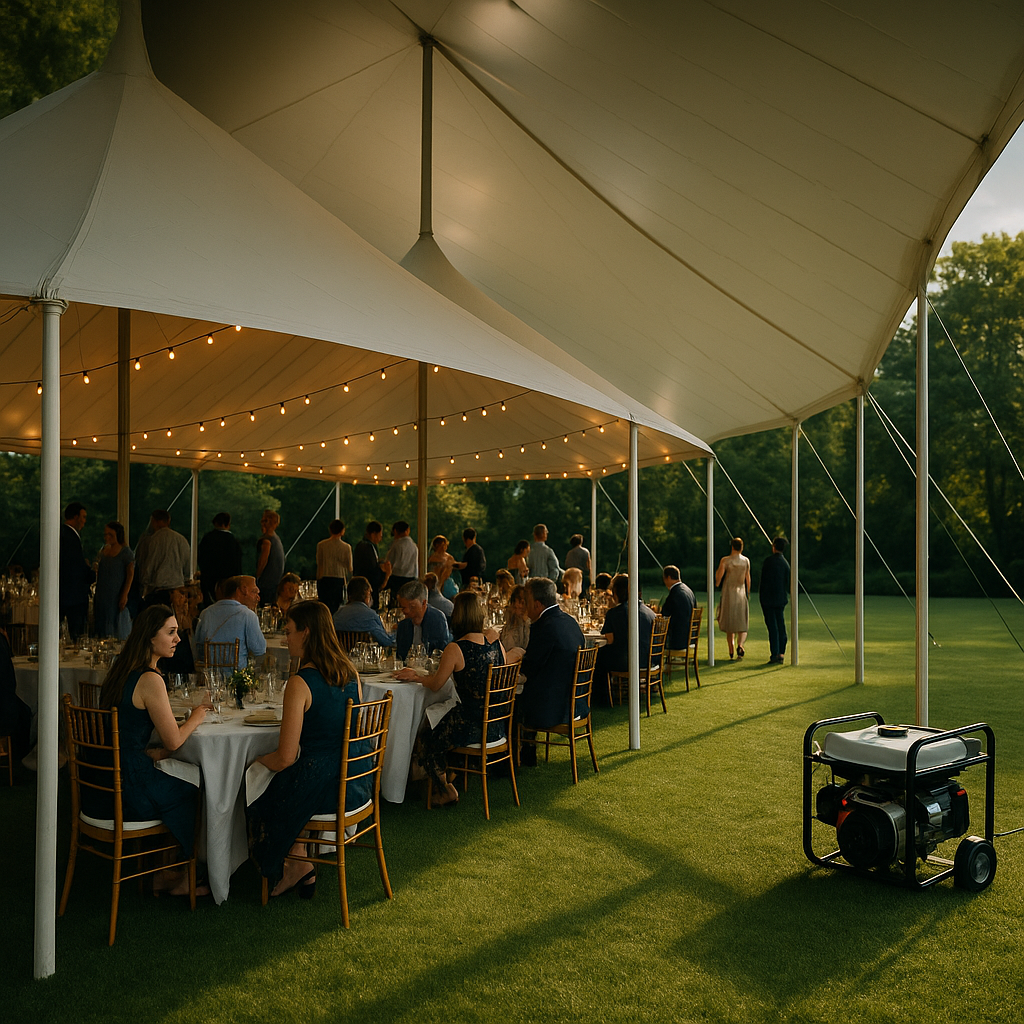
Gas and diesel generators produce carbon monoxide (CO), which is colorless and odorless. The U.S. Consumer Product Safety Commission advises operating generators outdoors only, at least 20 feet from buildings, with exhaust pointed away from windows, doors and vents. That guidance is written for homes, but the logic applies directly to tents: fabric walls, sidewalls and drops can hold exhaust where people are gathered.
For tented events specifically, many fire codes go further. Fire codes based on the International Fire Code commonly require generators and other internal combustion power sources to sit at least 20 feet from tents and to be separated from the public by fencing or another approved barrier. Florida enforces its own Florida Fire Prevention Code, built on Florida-specific editions of NFPA 1 and NFPA 101 and enforced locally, so the exact separation and barrier requirements for your event come from the local fire marshal and permit conditions.
Practical placement rules we use as a starting point:
- Measure from the nearest tent edge, including sidewalls, not from the center of the tent.
- Point the exhaust away from the tent, entrances, catering prep, restrooms and any building openings.
- Check the wind. Place the unit downwind of guest areas whenever the site allows, and remember that South Florida sea breezes can shift during the day.
- Fence or barricade it so guests, children and pets cannot reach a hot engine or exhaust outlet.
- Never enclose it. Tucking a generator under a tent, in a garage, carport or shed to hide it defeats the purpose of the distance.
Cable Runs: Safe, Rated and Out of the Way
Every foot of distance you add for exhaust becomes a cable you have to route. Plan that route before setup day, not during it.
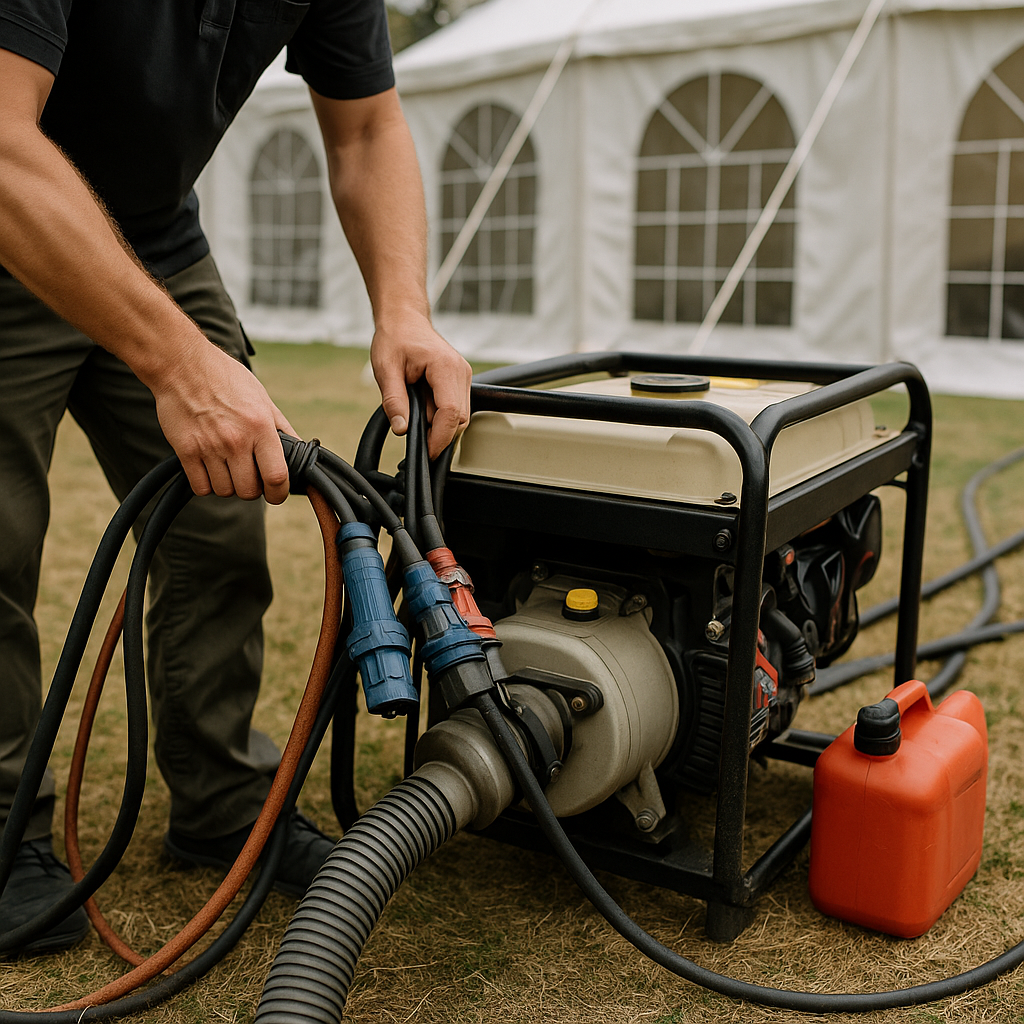
- Use rated cords. OSHA's generator guidance calls for heavy-duty, grounded, undamaged cords rated for the load, and GFCI protection where equipment is used in wet or damp locations. Outdoor events on lawns and beaches usually qualify as damp.
- Follow the manufacturer on grounding. Correct grounding depends on the generator and how it is connected; OSHA's grounding fact sheet explains why, and a qualified electrician or the rental company should set it up.
- Protect walkways. Run cables along tent perimeters and behind service areas. Where cables must cross a path, use cable ramps or covers rather than tape alone.
- Keep egress clear. Cables, distribution boxes and fencing should never block exits, fire lanes or emergency vehicle access.
- Don't backfeed buildings. A generator should never be connected to a building's electrical system without a properly installed transfer switch.
Noise: Plan the Sound, Not Just the Power
A generator placed 20 feet from the tent can still be loud enough to cut through toasts, ceremony vows and quiet dinner moments. A few choices make a real difference:
- Ask for sound-attenuated or inverter units. Many event rental generators are built with enclosures designed for quieter operation. Ask the vendor for the rated sound level at a stated distance so you can compare options.
- Use distance and structures. Placing the unit behind a service tent, vehicle or landscaping can soften sound, as long as it doesn't trap exhaust or block airflow.
- Face it wisely. Point exhaust and the noisiest side away from the ceremony, stage and dining area.
- Check local rules. Noise ordinances and event hours vary by city and by venue, and residential neighborhoods may have stricter limits. Confirm with the venue and municipality before finalizing the timeline.
Fuel and Refueling
Fuel is where small shortcuts turn into fire risk. Keep the plan simple:
- Size the tank to the event. Ask the vendor to estimate run time at your expected load so the unit doesn't need refueling while guests are present.
- Refuel only when the engine is off and cool, in a location approved by the fire official and away from tents and guests.
- Store fuel properly. Use approved containers, keep them away from the generator and the tent, and follow local storage rules.
- Keep an extinguisher nearby. The fire department or permit may specify the type and number required.
Weather: The South Florida Factor
OSHA advises keeping generators dry, and CPSC notes that some manufacturers recommend a rated noncombustible generator cover or waiting until rain passes. During rainy season, plan for:
- A level, firm base that won't pool water or sink in soft ground.
- A cover approved by the manufacturer that keeps rain off without restricting airflow or exhaust.
- Connections and distribution boxes raised off the ground and protected from runoff.
- A weather call: who decides to pause power or the event if lightning moves in.
It's also worth looking for generators with an automatic CO shut-off feature, which CPSC encourages consumers to seek out.
Temporary Power vs. Venue Power
Venue power isn't automatically more reliable, and a generator isn't only for remote sites. The right choice depends on what you are powering and what the venue can actually supply.
Venue power can work well when:
- The venue confirms available capacity and which circuits are dedicated to your event.
- Outlets or panels are close enough to reach the tent without long, exposed runs.
- Your load is modest: lighting, a DJ setup, and limited catering equipment.
Temporary generator power usually makes sense when:
- The site has no usable power, or outlets are far from the tent.
- You're running high-demand equipment: tent air conditioning, full catering lines, large stages or lighting rigs.
- You need power isolated from the venue so a tripped breaker in the building doesn't shut down the event.
Many events use both: venue power for small loads and a generator for air conditioning and catering. Whichever you choose, list every piece of equipment with its power needs and have the rental company or a licensed electrician size the system. Temporary installations may also require electrical and fire permits, depending on the jurisdiction.
A Quick Pre-Event Checklist
- Generator location marked on the site plan, with distance to tent and exits.
- Exhaust direction and prevailing wind checked.
- Barrier or fencing in place.
- Cable routes, crossings and covers planned.
- Load list reviewed by the vendor or electrician.
- Fuel quantity, storage location and refueling plan confirmed.
- Weather cover and rain plan ready.
- Permits and fire marshal requirements confirmed with the venue.
At VNV Events, we coordinate power placement with tent, catering and entertainment vendors as part of the overall site plan, so the generator ends up where it's safe, quiet and out of sight rather than wherever there was room on delivery day.
Frequently Asked Questions
How far should a generator be from a tent?
CPSC recommends at least 20 feet from occupied structures, and many fire codes set a 20-foot minimum from tents along with a barrier from the public. In Florida, the requirement that applies to your event is set by the local fire official, so confirm the distance and any barrier requirement during permitting or with your venue.
What are the best practices for managing generator noise?
Choose a sound-attenuated or inverter unit, compare vendors' rated sound levels, place the generator away from the ceremony, stage and dining area, and use distance or service structures as buffers without trapping exhaust. Confirm local noise rules and event hours with the venue.
Can we just plug into the venue's outlets?
Sometimes. Ask the venue for available capacity, circuit locations and any restrictions, then compare that against a full equipment list. Air conditioning and full catering setups often exceed what standard outlets can supply.
Is it safe to run a generator in the rain?
Only as the manufacturer allows. Keep the unit and its connections dry, use GFCI protection in damp conditions, and never move a generator into an enclosed space to shelter it from rain.
Visuals