What Happens to the Flowers on Monday Morning
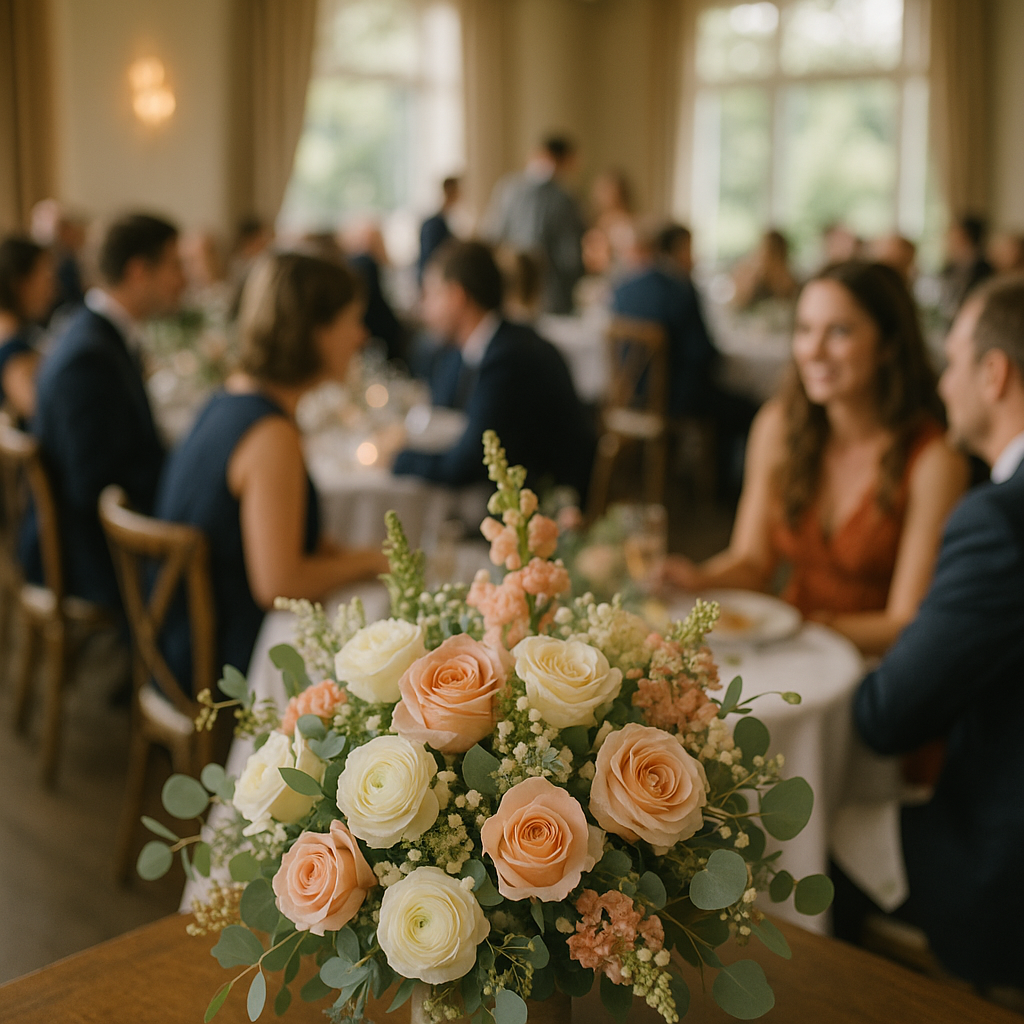
It is 11:40 on a Saturday night in Weston. The last song has played, the venue contract says the room must be empty by midnight, and roughly $6,000 worth of living material is sitting on eighteen tables. Nobody has been assigned to it. So the banquet staff does the only thing left: they lift the arrangements into rolling bins and the flowers go out with the linen napkins and the cake boxes.
That is the real answer to "what to do with wedding flowers after" for most couples — not a choice, but a default that happens because no one made a decision on Tuesday. Donation, guest giveaways, repurposing and composting are all achievable. They are also all logistics problems with a hard deadline, and every one of them fails if it is decided at 11:40.
The flowers have an expiration clock, and it started before the ceremony
Cut stems are perishable in a way couples routinely underestimate. Flowers are largely water, and warmth accelerates senescence — heat, moving air and ethylene exposure all shorten vase life, which is why UF/IFAS advises keeping arrangements cool, out of direct sun and away from ripening fruit. Postharvest guidance from Oklahoma State University Extension makes the same point from the grower's side: low temperature limits water loss, and any wilting the flowers experience is permanent damage to their remaining life.
Now add South Florida. A centerpiece that spent six hours in an outdoor cocktail hour in August has already spent most of its second life. A ballroom arrangement that never left air conditioning may have three to five good days left. This is the single most useful thing to know before planning a handoff: what you can donate on Sunday morning is not the same as what you can donate on Monday afternoon.
First question: do you actually own them?
Before planning any second life, read the floral line items in your contract. In most weddings, the stems are yours and the hardware is not. Rented vessels, candelabras, arbors, mirrored bases, pillars and structural mechanics typically go back to the vendor — and if they leave in a guest's back seat at midnight, someone is paying a replacement fee.
Sort your floral inventory into three buckets in writing:
- Purchased and yours to move: loose stems, bouquets, most centerpiece flowers, garlands, petals.
- Rented and returning: vases, stands, structures, linens under the arrangements, lighting elements.
- Installed and staying until strike: arches, ceiling pieces, anything anchored, which requires a crew and tools rather than good intentions.
This inventory is the backbone of the whole plan, and it belongs in the same document as your strike schedule. Working it through with your event planning team during the final walkthrough — not the week after — is what converts a nice idea into an assigned task.
The strike window is the constraint everything else bends around
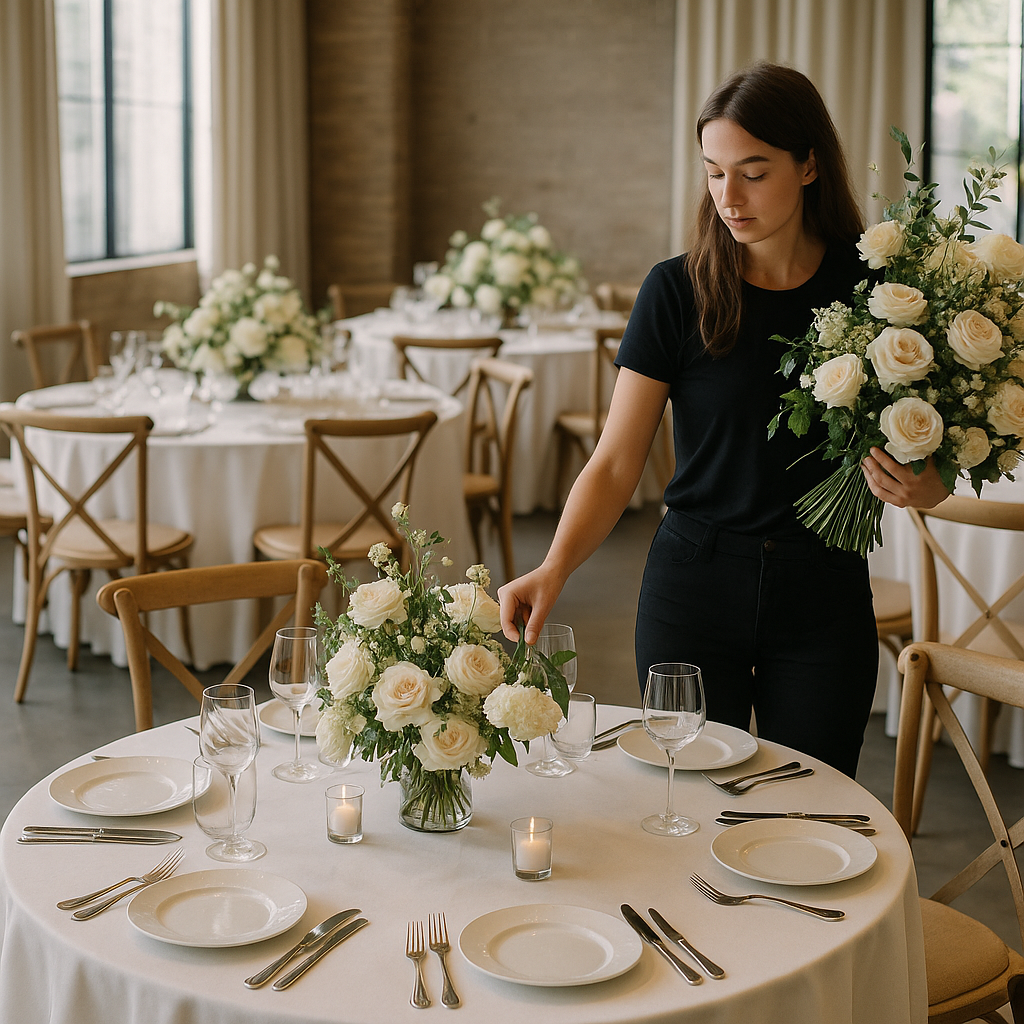
Most venues in Broward and Miami-Dade give you 60 to 90 minutes after the last song. Inside that window, the room has to be cleared, rentals staged, catering broken down and floral moved. Nothing gets a second life unless a named human is holding a set of car keys and a destination.
Three things make or break it, and all three are staffing decisions rather than floral decisions:
- A named owner. Not "my cousin will grab them." One person, listed on the timeline, with a phone number.
- Transport that exists. Sixteen centerpieces in water do not fit in a sedan. Someone needs a vehicle, and someone needs boxes or crates that will not tip.
- Water discipline. Stems that ride home dry for 45 minutes arrive as a different product than stems that ride in two inches of water.
This is exactly the kind of task that belongs to the same crew executing breakdown. When floral repurposing and handoffs are written into the strike-time staffing plan, they happen. When they are left to guests, they do not.
Repurposing ceremony flowers at the reception is the cheapest win available
The highest-value move is not a donation at all — it is using the same flowers twice inside one event. Ceremony arrangements sit in front of your guests for roughly 25 minutes, then become invisible. Moved during cocktail hour, an altar arrangement becomes the escort table, aisle pieces become bar and lounge accents, and bridesmaid bouquets become the sweetheart table.
What makes it work in practice: designing the ceremony pieces from the start as movable objects. Two people should be able to lift each one. Vessels should be watertight and stable on a different surface height. And the flip has to be rehearsed as a timed task, because a room flip run by improvisation during cocktail hour is how vases get dropped. This is a design conversation to have with your floral decorations team before anything is built, not a request made on the day.
Donating flowers: call first, because the recipient has rules
"Donate them to a hospital" is the most repeated advice in wedding planning and the least examined. Health care facilities have infection-control policies that constrain what they can accept and where it can go. CDC guidance for health care environments directs that fresh or dried flowers and potted plants not be allowed in patient-care areas for immunosuppressed patients, and that care of flowers be assigned to staff who are not directly involved in patient care. The same guidance notes that for immunocompetent patients, there is minimal or no evidence that plants pose an increased infection risk — which is why policies vary widely between an oncology floor, a general medical unit and a lobby.
Translation: a hospice, a nursing home, a rehabilitation center, a community center, a church or a shelter may be delighted, but the answer depends on the specific facility and the specific ward. So:
- Call at least two weeks out and ask who accepts donated florals, in which areas, and in what condition.
- Ask about the receiving window. Many facilities cannot take a delivery at 1:00 a.m. Sunday, which means someone is storing the flowers cool overnight.
- Offer them in clean, simple, watertight vessels — not in rented crystal you need back, and not in soaked foam.
- Strip anything mechanical: wire, picks, foam fragments, cable ties.
If a tax deduction is part of your thinking, verify the recipient is a qualified organization using the IRS Tax Exempt Organization Search, and understand the substantiation rules before you assume a number. The IRS requires a contemporaneous written acknowledgment for any single contribution of $250 or more, and Form 8283 for noncash contributions over $500; details and valuation rules are in Publication 526. Fair market value for one-day-old cut flowers is also not the invoice price.
Sending flowers home with guests, without the awkwardness
Guest giveaways work when they are structured and fail when they are announced. A DJ saying "take the centerpieces!" produces a scrum, broken glass and rented vases in Ubers.
What works instead: a designated table near the exit with wrapped bundles and kraft sleeves, staffed for the last 30 minutes; a small printed card explaining what the flowers are and how to keep them alive; and clear instruction that vessels stay. If you want the vessel to travel, buy inexpensive ones for that purpose and mark them. Guests leaving at 10:30 also miss the giveaway entirely — so the table should open before the last dance, not after it.
The pile at midnight: composting and where the rest actually goes
Assume some material is left. Petals torn during dancing, bruised greenery, spent stems from cocktail arrangements. Composting is genuinely the right destination — organic material sent to landfill decomposes anaerobically and generates methane, and EPA reports that food, yard trimmings, wood and paper together make up 51.4% of municipal solid waste in landfills.
Here is the wrinkle nobody mentions. Florida's solid waste statute defines "yard trash" as vegetative matter resulting from landscaping maintenance and land clearing operations — that is lawn and landscape material, not a ballroom's worth of spent centerpieces. Broward County's landfill operates as a Class III facility accepting bulk waste, yard trash and construction and demolition debris originating in the county, with residential drop-off centers restricted to residents of participating municipalities. In other words, commercial event floral waste does not automatically flow into a green-waste stream. Diversion has to be arranged on purpose, with a facility that has agreed in advance to take it.
Practical version for a couple: designate a home compost pile, a community garden, or a commercial composter you have called. And separate first — foam, wire, plastic water tubes, ribbon and cable ties do not belong in compost, and a single foam block contaminates a batch.
Foam is the reason some arrangements have no second life at all
Traditional green floral foam is a plastic. Research from RMIT University published in Science of the Total Environment found that floral foam breaks into microplastic particles that aquatic animals ingest, with some species showing stress responses, and the study reported that foam leachates were more toxic to aquatic invertebrates than leachates from other plastic families. The Sustainable Floristry Network's summary of the study and the manufacturer's response is worth reading if you want the full picture rather than the headline.
The operational consequence matters more than the environmental one for your Monday morning: a foam-based arrangement cannot be re-hydrated, cannot be re-vased cleanly, and cannot be composted. Foam-free mechanics — chicken wire, kenzan pin frogs, reusable armatures, water tubes — leave you with stems that can go somewhere on Sunday.
Fewer imported stems is also a design decision
South Florida is the front door of the U.S. cut flower trade. CBP reports that Miami receives more than 91% of cut flowers arriving from South America, with agriculture specialists inspecting over a billion stems each year for pests. Living within a mile of that supply chain is a genuine advantage — availability here is extraordinary — but it also means the default palette for a Broward wedding is a cold-chain import.
Seasonal and locally grown material, tropical species that hold up in local heat, and potted plants that guests can replant all shrink both the footprint and the leftover pile. Ask your florist a specific question rather than a general one: which of these varieties are available from Florida growers in my month, and what does substituting them do to the palette?
The strike-night decision table
| Floral element | Realistic second life | Who moves it | Decide by |
|---|---|---|---|
| Ceremony altar & aisle pieces | Flipped to reception focal points during cocktail hour | Event staff, as a timed task | Final walkthrough |
| Bridal party bouquets | Sweetheart table, then preserved or gifted | Named family member | Two weeks out |
| Guest table centerpieces | Guest giveaway or facility donation | Giveaway table staff, or driver | Two weeks out (call recipient) |
| Installed arches & hanging work | Usually none — dismantled at strike | Floral crew with tools | Contract signing (build foam-free) |
| Rented vessels, stands, structures | Return to vendor | Rental pickup | Contract signing |
| Loose greenery, petals, spent stems | Compost, after removing mechanics | Designated hauler | One week out (confirm site) |
FAQs
Can I donate my wedding flowers to a hospital?
Sometimes, and only after calling that specific facility. Infection-control policies differ by unit, and CDC guidance directs that fresh and dried flowers be kept out of patient-care areas for immunosuppressed patients. Hospices, nursing homes, rehabilitation centers, shelters and community centers are often easier to place with, and lobby or common-area placement is more commonly permitted than bedside placement.
How long do wedding flowers last after the reception?
Typically two to five days for indoor arrangements that were kept cool and re-watered promptly, and considerably less for anything that spent an afternoon outdoors in South Florida heat. Re-cut the stems, use clean water with floral preservative, and keep them out of sun, drafts and ethylene sources like ripening fruit.
What is the single biggest mistake couples make with post-wedding flowers?
Deciding on the night of. Every viable outcome — donation, giveaway, composting — requires a named person, a vehicle and a receiving window arranged in advance. Without those three, the flowers go in the trash regardless of intent.
Can wedding flowers be composted?
Yes, once all non-organic material is removed: floral foam, wire, picks, water tubes, cable ties, ribbon and plastic wrap. Note that event floral waste is not the same as statutory "yard trash" in Florida, so a drop-off site has to be identified and confirmed rather than assumed.
Is repurposing ceremony flowers at the reception worth it?
It is usually the best value in the entire floral budget, because the same arrangements serve two rooms. It only works if pieces are designed to be lifted and moved by two people, and if the flip is on the timeline as an assigned task.
What about preserving my bouquet?
Pressing, resin casting and freeze-drying all exist, and all have the same requirement: the bouquet must reach the preserver quickly, usually within a few days, kept cool and hydrated. Book the preservation service before the wedding and put the handoff on the timeline like any other vendor delivery.
This article is general information about event operations and waste handling, not legal or tax advice. Charitable deduction eligibility, valuation and substantiation depend on your circumstances — consult a qualified tax professional, and confirm disposal and donation requirements with the specific facility and your local solid waste authority.
Decide on Tuesday, Not at Midnight
The flowers will be beautiful either way. What separates a wedding whose blooms end up in a hospice lobby, a neighbor's kitchen and a compost pile from one whose blooms end up in a dumpster is a single line on a run sheet with a name next to it. Pick the destination, pick the driver, build foam-free, and give the ceremony pieces a second room to live in. Contact us today to design florals with a Monday morning already planned.
Visuals