Site logistics What a live station needs on site
These are the details that decide whether the station runs smoothly in a hotel, a club or a residential tower. Review them with the property early, then confirm them in the written proposal.
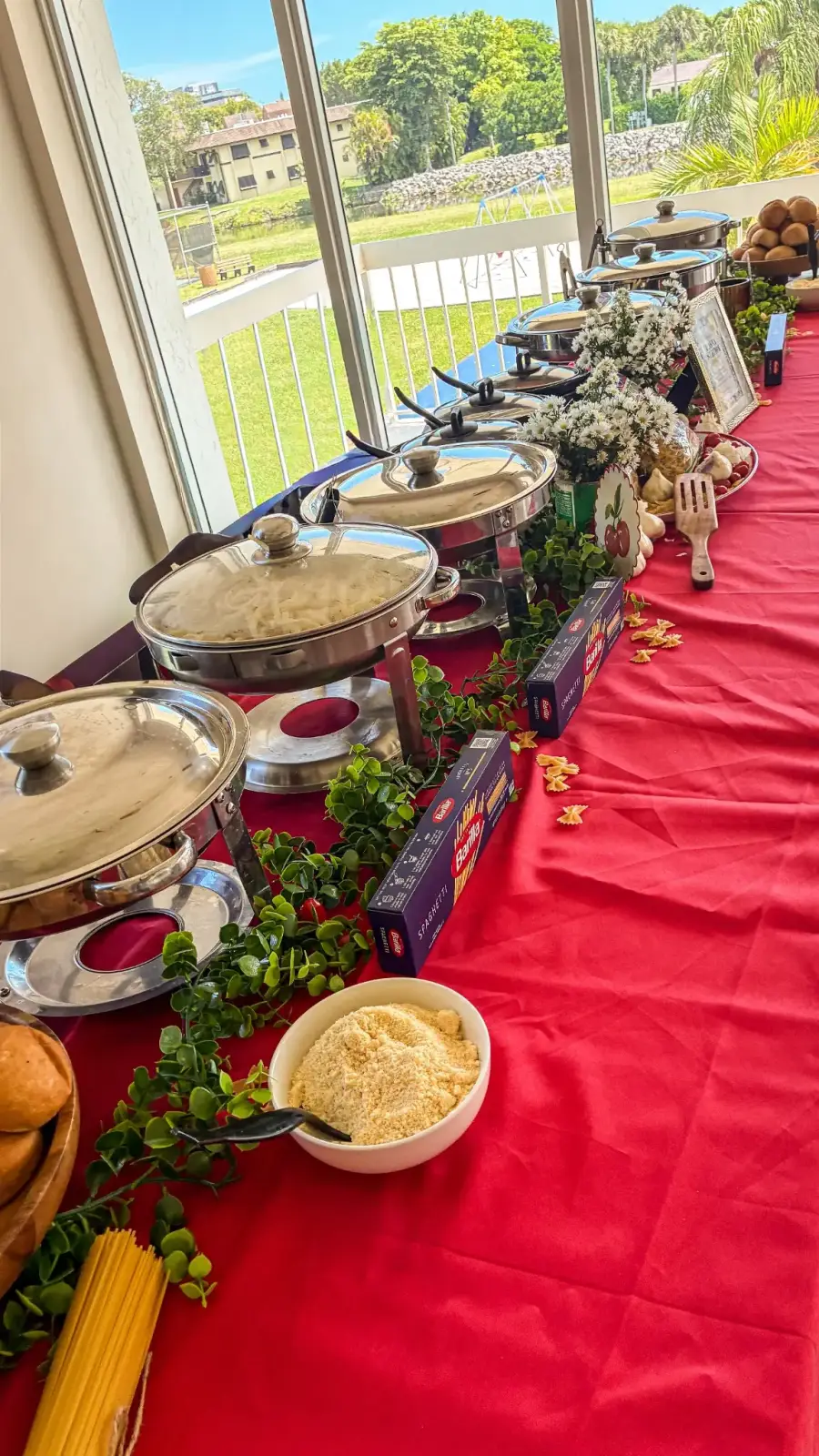
Covered cooking and service area
Live cooking needs solid cover approved for the location, whether that is a ballroom, an amenity room, a lanai or a covered terrace. On an oceanfront terrace, wind matters as much as rain, so check how exposed the intended position actually is at the hour you plan to serve.
Safe, venue-approved power
Confirm with the property what power is available at the station position and whether it may be used for catering equipment. Actual power requirements for the station are stated in the proposal rather than assumed on site, and generators are a separate conversation that many properties will not allow at all.
Load-in path
In Bal Harbour the route is usually the part that surprises people: valet or loading dock access, a service entrance, a freight elevator with its own reservation window, corridors, thresholds and distance to the room. Map it before the date and flag any restriction on vendor arrival hours.
Guest queue and flow
Leave room for guests to line up without blocking bar access, walkways, elevator lobbies, restrooms or the dance floor. In narrower amenity rooms, plan the approach from one side and the exit from the other so the line keeps moving.
Service window
The package includes two hours of live-chef service. Fix the start time against the run of show so the station is not opened during toasts or a program block, and confirm any change to that window in writing.
Venue approval
Hotels, clubs and associations may restrict onsite cooking, open flame, equipment placement or vendor load-in hours. Get written confirmation that a live cooking station is permitted in the intended position, from whoever actually signs off.
Weather contingency
Coastal heat, sea breeze and afternoon storms are planning inputs, not surprises. Identify an indoor or covered alternate position for the station and agree in advance who makes the call and by when.
Coordination
Share the floor plan, timeline and property contact early so the station position, power and service window are settled before the final proposal. Contact the team with the details you already have.