Site logistics What a live station needs on site
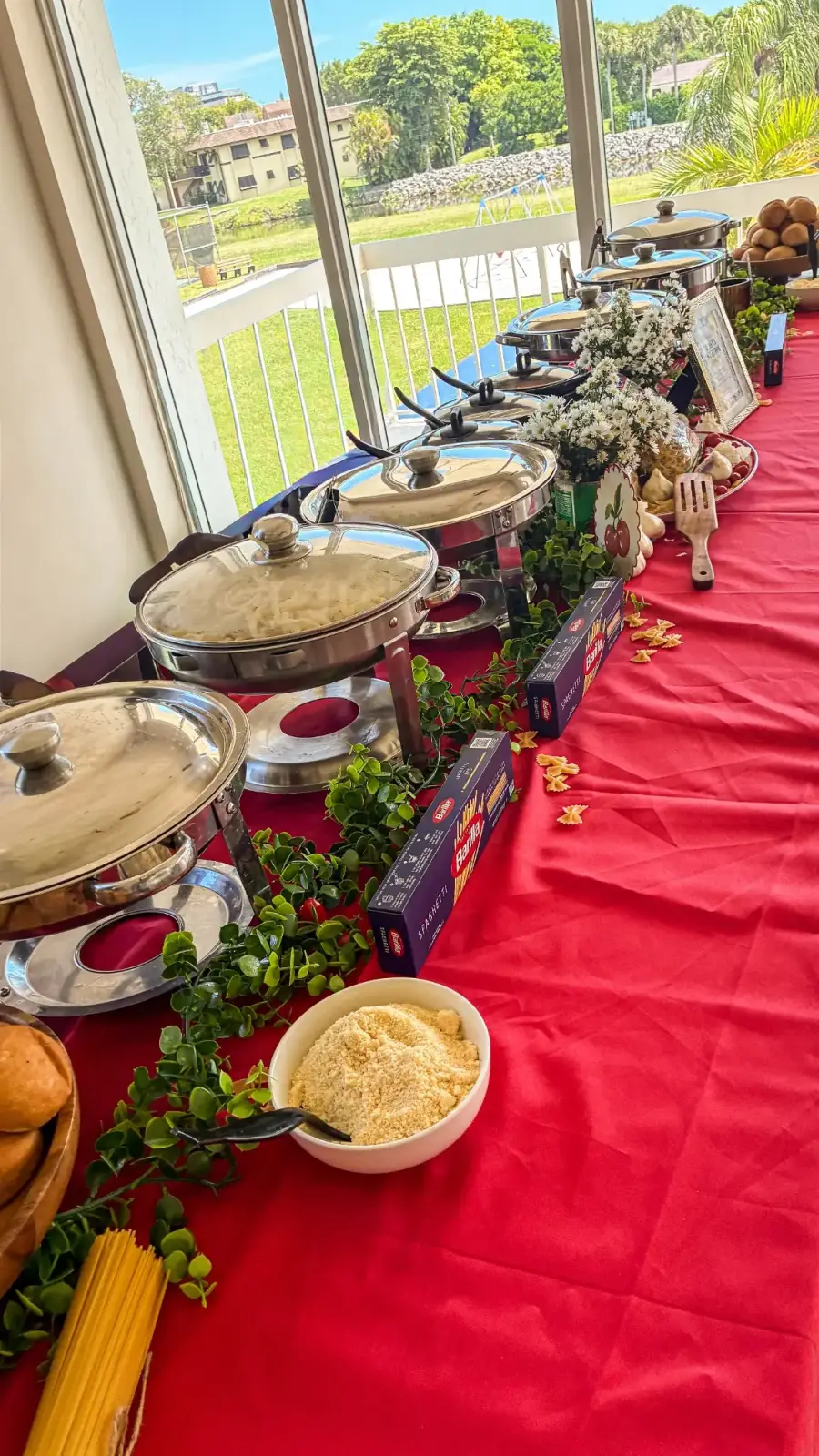
A pasta station is working cooking equipment placed in a guest-facing spot. On a controlled residential island, a short walkthrough plus one conversation with the property answers nearly all of it before anything is signed.
Covered cooking and service area
Live cooking needs to sit under solid cover: an interior room, a lanai, a covered terrace, or a tent if the property permits one. Uncovered placement on open lawn is the most common reason a station has to be repositioned on the day.
Safe, venue-approved power
Identify the nearest usable power source, how far it sits from the station position, and whether the property permits its use for catering equipment. The actual requirement for your station is stated in the proposal rather than assumed on site, and a generator, if one is even needed, may require separate approval.
Load-in path
Map the route from the permitted stopping point to the station: gate clearance, distance, stairs, thresholds, elevators and any grass or gravel runs. A long or restricted path affects setup timing and should be flagged well before the event date.
Guest queue and flow
Leave room for guests to line up without cutting across the bar, a walkway, the dance floor or the path to restrooms. For larger counts, plan the approach from one side and the exit from the other so the line keeps moving.
Service window
The package includes two hours of live-chef service. Decide whether it runs as part of the meal or as a later moment, fix the start time against the run of show so it does not open during toasts or a program block, and confirm any change in writing.
Property and Village approval
Ask the owner or their representative what an outside caterer must provide, whether live cooking is permitted in the intended position, and which of those items also has to be confirmed with the Village. Get it in writing.
Weather fallback
South Florida heat and afternoon storms are planning inputs, not surprises, and a waterfront setting adds wind. Identify an indoor or covered alternate position for the station and agree in advance who makes the call and by when.
Coordination
Share the property contact, floor plan and timeline early so the station position, power and service window are settled before the final proposal. Contact the team with whatever details you already have.