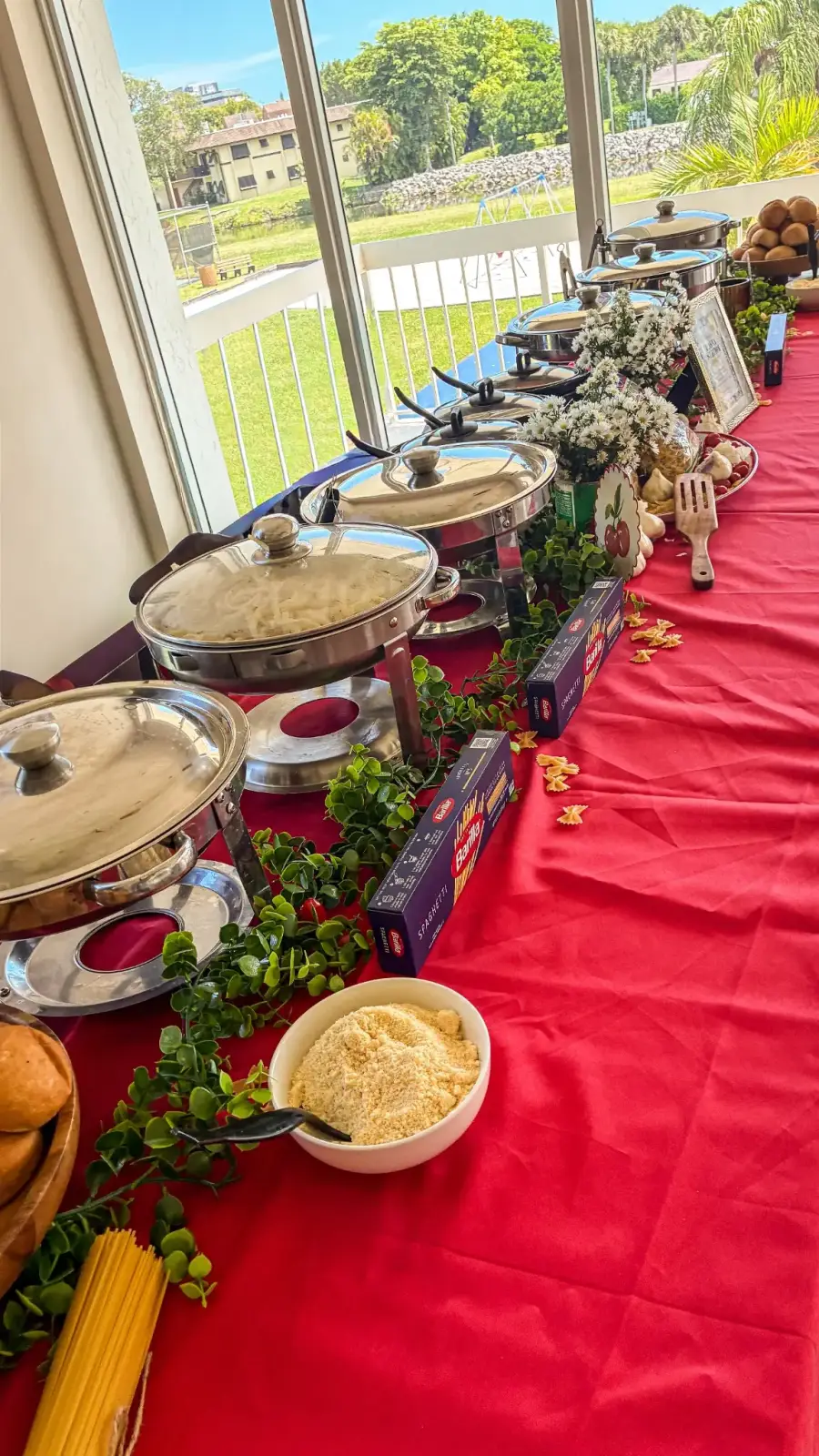
Covered cooking and service area
Live cooking has to sit under solid cover: a roof, a lanai, a covered terrace, a pavilion or a tent approved for that location. Open turf with nothing overhead is the most common reason a station gets repositioned on arrival, and at a permitted City site that repositioning may not match the approved site plan.
Safe, venue-approved power
Confirm with the venue or facility what power exists at the intended station position and whether it may be used for catering equipment. The station's actual power requirements are stated in the proposal rather than assumed on site. Generators are a separate question and can trigger additional review at City facilities, so raise them before the date is locked.
Load-in path
Map the route from the unloading point to the station: gate widths, elevator access, stairs, curbs, grass runs, guard-gate procedures at gated communities and clubs, and the distance overall. A long or restricted path changes setup timing and should be flagged well before the event date.
Guest queue and flow
Leave room for guests to line up without blocking the bar, walkways, restrooms or the dance floor. For larger counts, plan the approach from one side and the exit from the other so the line keeps moving and plates clear the station.
Service window
The package includes two hours of live-chef service. Fix the start time against the run of show so the station does not open during toasts or a program block. Where the facility rental block also has to absorb setup and breakdown, work backwards from the end of that block first.
Venue approval
Clubs, clubhouses and HOA amenity buildings often restrict outside vendors, onsite cooking, open flame, equipment placement or load-in hours. Get written confirmation that a live cooking station is permitted in the position you intend to use, not just that catering is allowed generally.
Weather fallback
South Florida heat and afternoon storms are a planning input, not a surprise. Identify an indoor or covered alternate position for the station in advance, check that the alternate has usable power, and agree who makes the call and by what time.
Coordination
Share the floor plan, timeline, facility contact and any permit or reservation conditions early, so the station position, power and service window are settled before the final proposal. Contact the team with whatever details you already have.