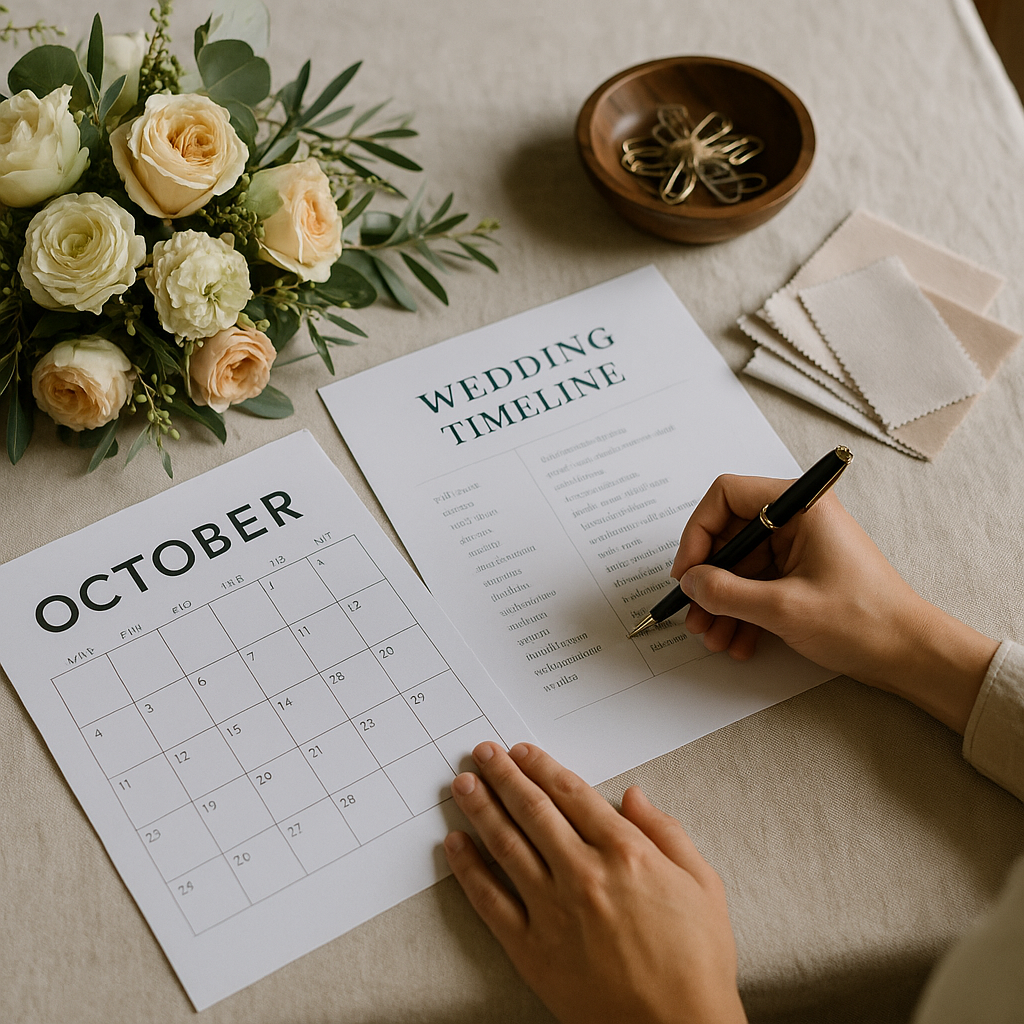
Many couples choose a ceremony time months in advance, often on a long summer evening when the light seems to last forever. That time goes on the invitations and into vendor contracts. Then the wedding lands in November, and the time that once sat comfortably in soft evening light now falls close to sunset or after it.
The end of daylight saving time doesn't take any light away. It does make the gap between a summer plan and a November evening easy to miss. If your ceremony time came from summer instincts, this is a good week to look again, calmly and with real numbers.
What Actually Changes on November 1
In 2026, daylight saving time ends on Sunday, November 1. At 2:00 a.m. local daylight time, clocks go back to 1:00 a.m. standard time, according to the National Institute of Standards and Technology. South Florida follows this change, so Broward, Miami-Dade and Palm Beach venues all shift together.
Two points matter for planning:
- The sun doesn't jump. The amount of physical daylight on November 1 is almost the same as on October 31. What changes is the label on the clock. Sunset that day comes about an hour earlier by the clock than it did the evening before, even though the sky itself barely moved.
- The real shift has been happening for months. Evenings have been getting shorter since early summer. A ceremony time that felt like early evening in June can sit in very different light by November, and the clock change just makes that gap obvious all at once.
One small detail for the night of Saturday, October 31: if your reception runs past 1:00 a.m., that hour happens twice. If any vendor contracts list end times or hourly overtime, ask how the repeated hour will be counted so there are no surprises at the end of the night.
Sunset Isn't the Same as Usable Light
It's tempting to plan around "sunset," but sunset is a precise astronomical moment, not a photography window. The U.S. Naval Observatory defines sunset as the moment the upper edge of the sun disappears below the horizon. It defines civil twilight as the period that follows, ending when the sun's center is 6 degrees below the horizon. The USNO also notes that clouds, atmospheric conditions and the local horizon affect how bright it actually looks.
For a wedding, that leads to a few practical distinctions:
- Light for the ceremony and portraits usually needs to happen before sunset, not at it. Ask your photographer how much time they want, and when.
- Civil twilight can produce a beautiful sky, but it's brief and fades quickly. It's a bonus, not something to schedule an entire portrait session around.
- Your venue's horizon matters. Buildings, tree lines, a hotel tower or a covered terrace can block direct light well before the official sunset time.
- Weather can move the timeline. A late-afternoon cloud bank can make the evening darker sooner. Plan with some buffer instead of relying on the best-case sky.
Build Your Timeline Backward From Sunset
Instead of starting with a ceremony time and hoping the light cooperates, start with sunset for your venue on your date and work backward. Get that time from a reliable source or from your photographer, then call it S.
The table below is a hypothetical planning example. The durations are sample numbers for discussion, not universal rules and not a fixed VNV Events policy. A short civil ceremony, a large family, a long walk from the parking area or a venue with strict access windows can all change these numbers substantially.
| Moment | Example timing (S = sunset at your venue) | What it protects |
|---|---|---|
| Vendor setup complete and lighting tested | Before guests are seated | Evening lighting is ready before anyone needs it, not after it gets dark |
| Guest seating opens | About S − 2:00 | Time for guests to arrive, park and walk to their seats without rushing |
| Ceremony begins | About S − 1:30 | A fully daylit ceremony, with room for a late start |
| Ceremony ends; family photos | About S − 1:00 to S − 0:40 | Group photos while faces are still evenly lit |
| Couple portraits | About S − 0:40 to S | The soft light many couples want, with a buffer for clouds or the horizon |
| Guests move to the reception | Around S, with path and space lighting already on | A safe, comfortable walk in fading light |
Look at what this exercise shows. If you kept a ceremony time chosen with summer evenings in mind, portraits could end up compressed into a few minutes or pushed into twilight. The fix isn't always to move everything one hour earlier. Sometimes moving only the ceremony is enough. Sometimes a first look before the ceremony solves it. Sometimes your venue's layout means you need more time, not less.
The Details That Are Easy to Miss
Earlier seating and accessible walking time
If the ceremony moves earlier, seating moves earlier too. Consider guests who use mobility aids, older relatives and anyone coming from a garage across the property. Earlier light is pointless if half the guests are still on their way when the music starts.
Vendor handoffs before the transition
The switch from ceremony to reception is where light becomes most noticeable. Pathway lighting, string lights and other appropriate fixtures should be on before guests move, not while they're walking. This depends on confirming arrival and setup times with your actual vendors, which is the kind of detail event-day coordination is designed to catch.
Fixed venue and meal constraints
Some venues have fixed access windows, kitchen schedules or noise limits. An earlier ceremony might mean a longer cocktail hour before dinner can be served. Make sure any changes to the light still fit the venue and catering timeline.
If your invitations are already out
You still have good options without reprinting:
- Keep the printed time and do a first look, so most portraits happen before the ceremony.
- Shorten the gap between seating and the start of the ceremony if your venue allows it.
- If you do change the time, send one clear update to guests through your wedding website, a message or a phone call, and confirm the change with every vendor in writing.
Where a Planner Helps
Most of this comes down to coordination: one person aligning photography, lighting, catering, the venue and the guest experience around a single sunset time. VNV Events' event planners offer guidance on timelines, vendors and guest logistics, and event-day coordination manages vendor arrivals, the schedule and guest flow on the day. If your November date is coming up, a one-on-one consultation at our Sunrise studio can help you test your timeline against your venue's real conditions before anything else is locked in.
A Checklist for Your Consultation
- Your exact venue address, ceremony location and date
- Sunset time for that location and date, plus the source
- Anything that could block the western horizon (buildings, trees, roofs)
- Your photographer's preferred portrait window and duration
- Your printed ceremony time and whether invitations have gone out
- Walking distance from parking to the ceremony and to the reception
- Guests who may need extra time or accessible routes
- Venue access windows, meal service times and end-time limits
- Lighting vendors and their setup and test times
- A weather backup plan and who makes that call
Frequently Asked Questions
When does daylight saving time end in 2026?
Sunday, November 1, at 2:00 a.m. local daylight time, when clocks go back to 1:00 a.m. This applies throughout South Florida.
Do we lose an hour of daylight on our wedding day?
No. Physical daylight barely changes from one day to the next. What changes is the clock: sunset happens about an hour earlier on the clock than before the change. The larger shift comes from the shorter days that have built up since summer.
Should we move our ceremony one hour earlier?
Not automatically. Start with sunset at your venue on your date, then work backward based on the light you need for the ceremony and portraits. Depending on the venue, guests and photographer, the right change could be larger, smaller or not needed.
Is civil twilight enough for portraits?
It can produce beautiful images, but it's short and depends on the weather and the horizon. Treat it as a bonus, not as your main portrait window.
Our invitations are already printed. What now?
Options include a first look, a shorter pre-ceremony gap or one clear update to guests. Confirm any changes with all of your vendors.
Plan for the Evening You'll Actually Have
A November wedding in South Florida can still have an unhurried ceremony, portraits and a reception under lights. The goal isn't to fight the clock. It's to plan for the evening you'll actually have, not the one you imagined in July. To walk through your timeline with someone who coordinates these details regularly, consider scheduling a consultation with VNV Events.
Visuals