
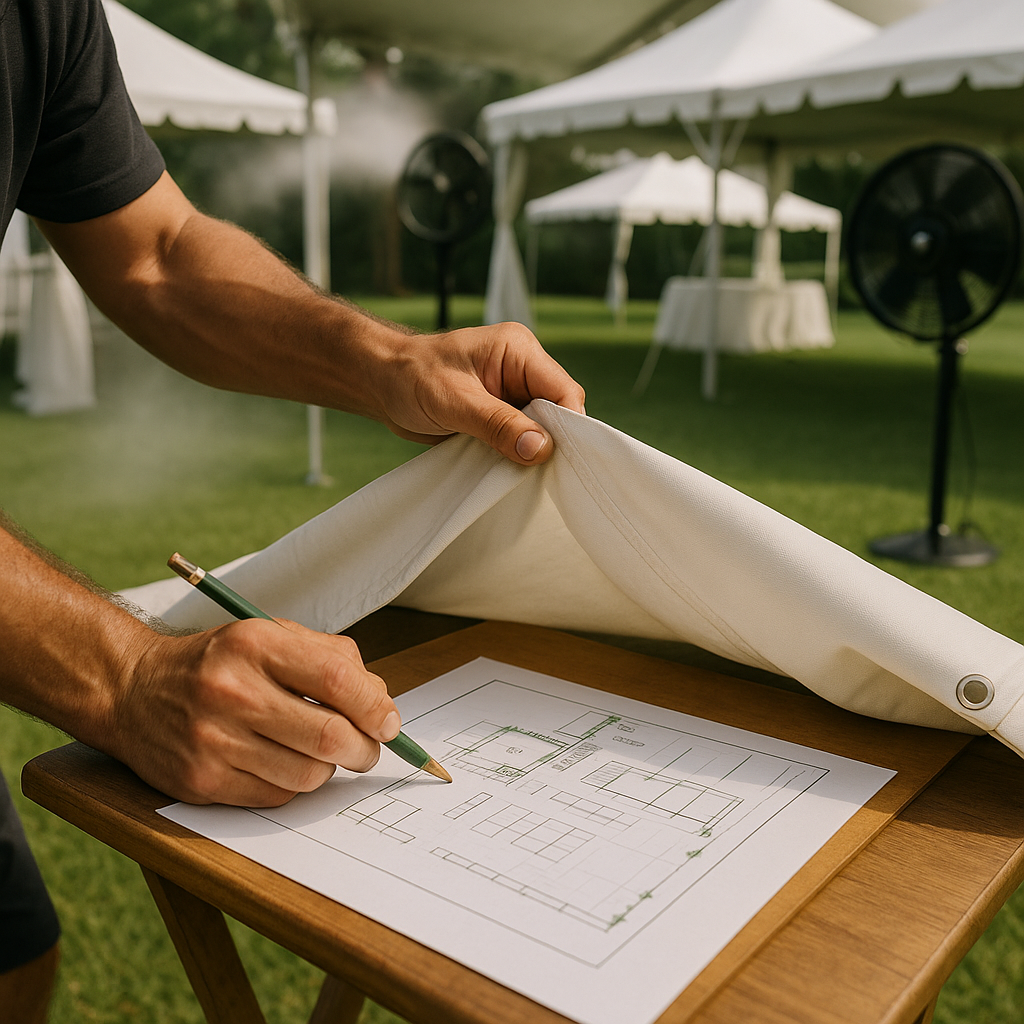
Heat is the one thing at a South Florida outdoor event that no amount of design can hide. The linens can be perfect and the band can be excellent, but if the first thirty guests to arrive are standing in direct sun with nowhere to go, the room never fully warms up — socially, that is. Cooling is not an amenity you add at the end. It is a layout decision, a power decision and a timeline decision, and it works best when all three are made together.
Here is how the common tools actually behave in our climate, where each one falls short, and how we sequence them on real event sites across Broward, Miami-Dade and Palm Beach.
Why South Florida heat behaves differently
Most cooling advice on the internet is written for dry climates. It assumes evaporation is free and fast. Ours is a humid subtropical climate, and humidity changes the math on almost every cooling method you can rent.
Two numbers matter more than the forecast high. The first is dew point — the measure of how much moisture is already in the air. When the dew point is high, water evaporates slowly, and every evaporative cooling method loses power. The second is radiant load: direct sun on skin, on a tent top, on a dance floor, on asphalt. Radiant heat is often what guests are actually reacting to when they say a space feels unbearable, even when the ambient temperature is only moderately high.
So the practical order of operations is: block the sun first, move air second, add moisture only where conditions and surfaces allow, and mechanically cool only the spaces you can actually seal.
Fans: the highest return per dollar, if you aim them
Air movement is the most reliable comfort tool we have, because it works on people rather than on air temperature. Moving air pulls heat and perspiration away from the skin, so guests report feeling cooler even when the thermometer has not moved at all.
The mistakes we see are almost always placement mistakes, not equipment mistakes:
- Fans pointed at nothing. A high-velocity fan aimed across an empty aisle does nothing for the seated guests eight feet to its left. Aim at occupied zones — seating, the bar queue, the dance floor, the buffet line.
- Fans fighting each other. Two units blowing head-on cancel out and create a dead pocket between them. Set up a directional flow across the space instead, with intake on one side and exhaust on the other.
- Fans on the ceremony aisle. Anything strong enough to help is usually strong enough to move veils, programs, floral and hair — and to overwhelm a lavalier microphone. Place them behind or outboard of seating, and plan to cut them during vows if the officiant's audio is at risk.
- Fans without a power plan. Multiple high-velocity units, catering equipment and lighting on the same circuits is how an event loses power mid-service. Loads should be distributed and confirmed with the venue or the generator provider in advance.
Large-diameter, low-speed overhead fans move a broader, gentler column of air and are usually a better fit inside a tent than floor units, which tend to blow paper goods around at table height. Barrel fans still earn their place at entry points, service corridors and behind the bar, where staff are working hardest.
Misting: excellent in the right spot, a liability in the wrong one
Misting systems cool by evaporation, which means their performance is tied directly to humidity. On a dry, breezy afternoon they can be genuinely impressive. On a heavy August day with a high dew point, the same system delivers far less temperature drop — and the water that does not evaporate lands on your guests, your floors and your equipment.
You will see dramatic cooling figures quoted for misting equipment. Treat those as best-case laboratory conditions, not as a promise for a July evening near the water. We plan misting as a supplement to shade and airflow, never as the primary strategy.
Where misting works well:
- Open-air standing zones such as cocktail hour perimeters, lawn games and smoking or lounge areas
- Entry queues and valet lines, where guests are stationary and exposed for a short stretch
- Back-of-house and staff areas, which are almost always the hottest part of an event site
Where it causes problems: near dance floors and any hard flooring, where residual moisture creates a slip risk; near open food service and bar stations; near audio equipment, uplighting and power distribution; and directly over seated guests in formalwear. High-pressure systems atomize water finely enough to evaporate more completely, but they carry higher setup and water-supply requirements than the low-pressure fan-mounted units most people picture. That difference should be settled during planning, not on load-in day.
Tenting: shade helps, the wrong tent hurts
A tent is the single most effective piece of radiant protection available, and it is also the fastest way to build an oven. The variable is the top.
Opaque white tops reflect sunlight and keep the space underneath measurably more livable during daylight hours. Clear tops are beautiful for evening events and for photography, but under midday sun they behave like a greenhouse — the light comes in and the heat stays. If the design calls for clear, we push the timeline later or add mechanical cooling to compensate.
Sidewalls are equally counterintuitive. They block low afternoon sun, which is real relief on a west-facing site, but they also cut the cross breeze that was doing most of the work. A common approach is to wall only the sun-facing side and leave the opposite side and the ends open until the sun drops, then adjust as the evening progresses. That flexibility only exists if it is planned into the rental order and the staffing.
Two more details that quietly matter: tent height, since taller structures give hot air somewhere to rise away from guests, and surface, since a tent set over asphalt or a parking area will radiate stored heat upward long after sunset. Grass and shaded ground behave very differently from a paved lot.
Mechanical cooling: only for spaces you can close
Ducted portable air conditioning can make a tent genuinely comfortable, and for a formal seated dinner in peak summer it is sometimes the only honest answer. But it comes with conditions. The structure has to be fully walled and reasonably sealed, or you are cooling the neighborhood. The units need clearance, a discreet placement that does not sit beside the sweetheart table, and dedicated power — often a generator, which then needs its own placement so the sound does not land in the ceremony.
The pre-cool is the part people forget. A tent needs to be closed and running well before doors, not switched on as guests arrive. That single scheduling change makes more difference than adding another unit.
Timing: the cheapest cooling tool on the list
Nothing beats moving the hottest part of the event into the coolest part of the day. Late afternoon into evening is the reliable window here, because the sun's angle drops, radiant load falls quickly and the sea breeze tends to help on coastal sites.
A few timeline habits that consistently pay off:
- Keep any fully sun-exposed seated segment short. A ceremony is far more forgiving at twenty minutes than at forty-five.
- Check the sun's actual path across your specific site, not just the sunset time. Where the light lands at 4:30 p.m. determines where the ceremony chairs and the bar should go.
- Build in a weather contingency for our summer storm pattern, and set a decision deadline with your team so the call gets made calmly rather than at the last minute.
- Schedule photography around the heat, not through it. Long portrait sessions in direct sun affect how the couple and the wedding party feel for the rest of the night.
The small comforts guests actually remember
Equipment sets the baseline. The details are what people talk about afterward.
- Water available the moment guests arrive, before the bar opens, and refreshed through the ceremony
- A genuinely shaded escape zone with seating, positioned close enough that guests will use it
- Programs that double as hand fans, and a discreet basket of cold towels for the walk from parking
- Shade over the guest path from parking or valet, which is often the most exposed stretch of the whole event
- Menu and service adjustments for heat — chilled and composed courses, tighter holding times, protected staging for anything temperature-sensitive, and cake and floral placement out of direct sun
- Comfort planning for the people working the event, since staff performance drops in heat before guest comfort does
How to build the plan
Start with a site walk at the same time of day your event will run. That one visit answers most of the questions: where the sun sits, where the breeze comes from, what surfaces are radiating heat, where power is available and how far guests have to walk unprotected.
From there, match equipment to the actual guest count and the actual footprint rather than to a general rule, and confirm who is responsible for setup, monitoring and adjustment during the event. Cooling is not a set-and-forget system. Sidewalls come down, fans get redirected, misting gets shut off when the dance floor opens. Someone has to own that.
Frequently asked questions
What is the most effective way to cool an outdoor event?
Layering, in this order: shade to cut radiant heat, airflow to move it away from guests, then evaporative or mechanical cooling where the space and conditions support it. No single method carries an event on its own in our humidity.
Do misting systems really work in Florida?
They help, in the right zones. Because they rely on evaporation, their effect is strongest when humidity is lower and airflow is good — open, breezy standing areas. They are a poor choice directly over dance floors, food service or seated dining.
Should I use a clear tent top?
For evening events, it can be a beautiful choice. For daytime or early-afternoon events in warm months, an opaque top is far kinder to your guests, or you will need mechanical cooling to offset the heat gain.
How much does cooling equipment cost?
It varies with the equipment type, the size of the space, rental duration, power requirements and labor. Ducted air conditioning for a fully walled tent sits at a very different level than a handful of fans. The only reliable number comes from a quote built around your specific site and guest count.
Can I set up cooling equipment myself?
Small fans, yes. Anything involving tent structures, high-volume equipment, water lines or generator power should be handled by a professional team — both for safety and because placement, not equipment, is what determines whether it works.
How far in advance should I plan for cooling?
Early enough that it can influence the layout and the timeline, which is where most of the real gains are. Inventory for peak season also moves quickly, so late requests limit your options to whatever is left.
Plan the comfort before you plan the décor
Guest comfort in South Florida is a design problem, not a rental line item. If you are planning an outdoor event here and want the heat handled before it becomes a story, talk to the VNV Events production team about a site walk and a cooling plan built around your date, your venue and your guest count.
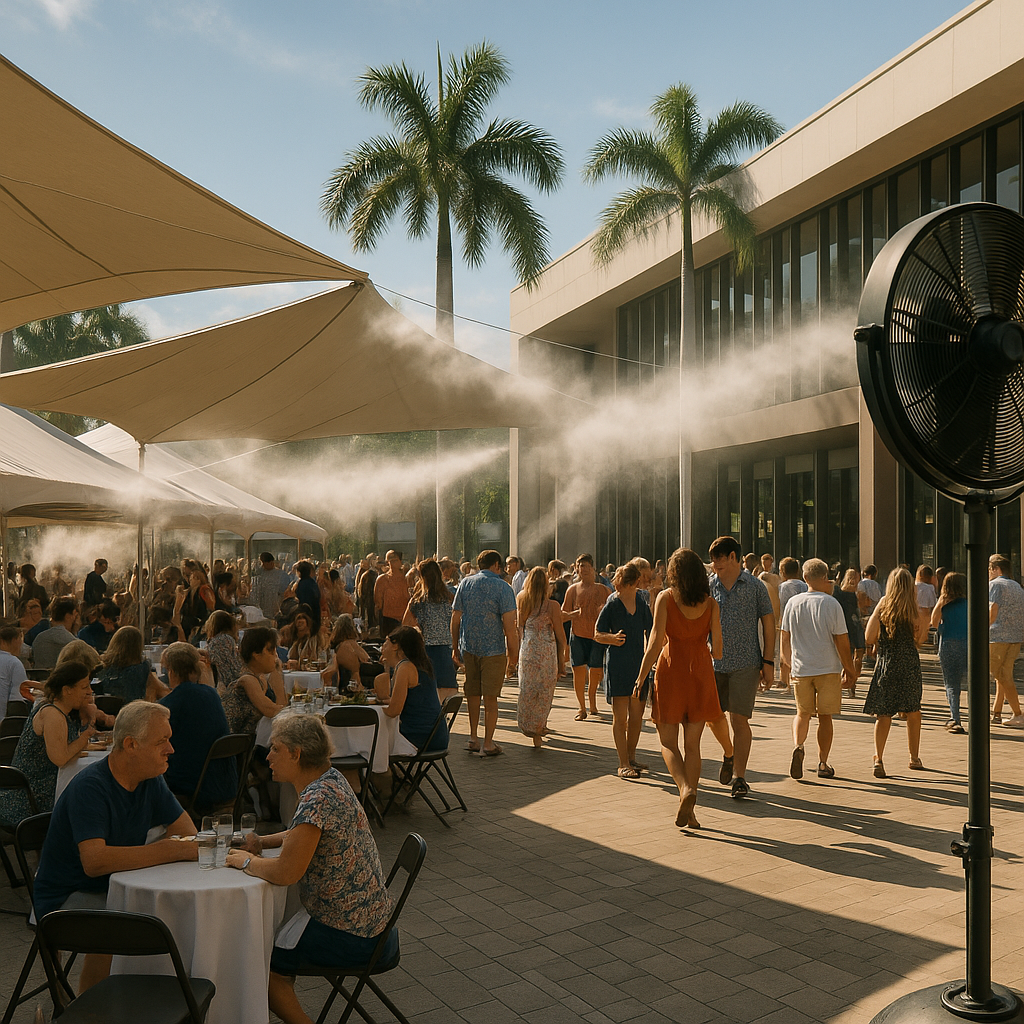
Plan comfort before the forecast becomes urgent
Coordinate the physical setup with our party tent and event rental team, then bring timing, guest flow and contingency decisions together with an event planner.